Your H200 compute just got 10% more affordable than ever before.
Get Startedright-arrow
Jason Karlin's profile image

Jason Karlin

Industry veteran with over 10 years of experience architecting and managing GPU-powered cloud solutions.
Specializes in enabling scalable AI/ML and HPC workloads for enterprise and research applications.
Former lead solutions architect for top-tier cloud providers and startups in the AI infrastructure space.

Best RTX PRO 6000 Blackwell Configurations for Rendering Workflows

Quick Answer For rendering workflows, the NVIDIA RTX PRO 6000 Blackwell Workstation Edition delivers maximum single-GPU rendering performance, while the 300W Max-Q model suits dual- and four-GPU systems. Both provide 96GB ECC GDDR7 memory. Choose between them based on workload, cooling, power, PCIe capacity, and whether local or cloud deployment better fits your production needs. […]

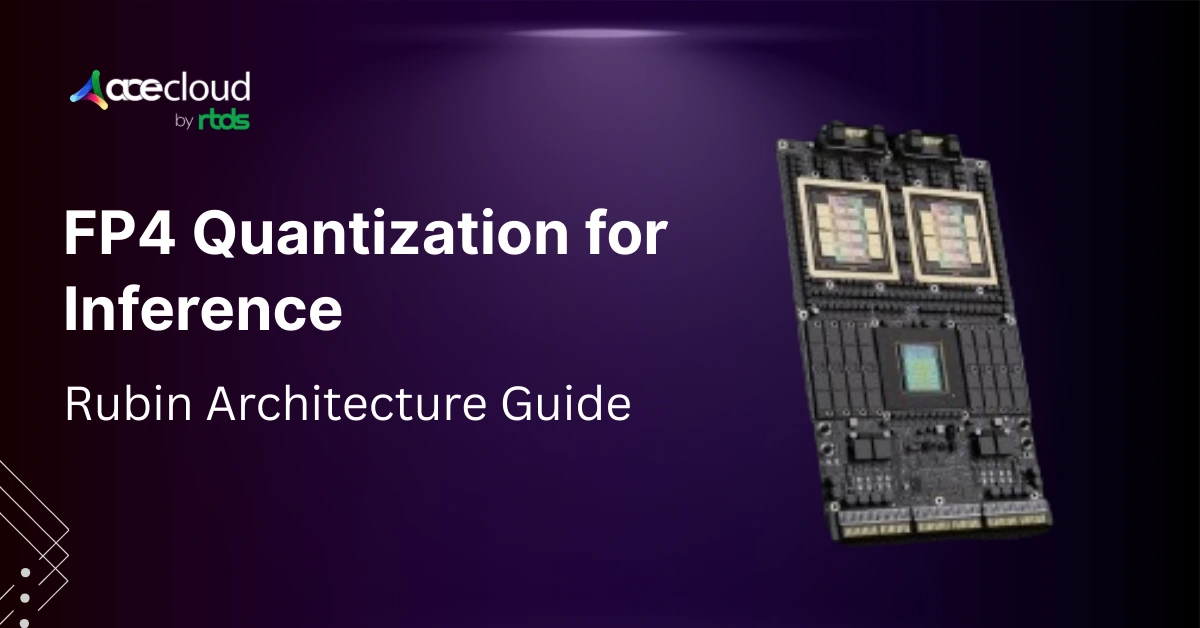
How to Prepare Rubin Architecture Workloads with FP4 Quantization for Inference

In 2026, inference is key for AI/ML teams worldwide. It makes a major part of the product, bill, and overall power envelope. It is also where most teams will win or lose over latency, throughput, and total cost per token. When energy and capacity become hard constraints, reducing bytes moved and watts spent becomes as important as […]

RTX PRO 6000 Blackwell vs. RTX 6000 Ada: Performance and Memory Tradeoffs

Quick Answer The RTX PRO 6000 Blackwell Server Edition is the stronger choice for data-center AI, large models, shared GPU services and workloads exceeding 48 GB. The RTX 6000 Ada remains practical for desktop visualization, CAD, content creation, rendering and workstation AI when 48 GB is sufficient, and a 300 W actively cooled card is […]

7 Stress Tests to Choose Between Gemini 3.1 Pro and Sonnet 4.6

Gemini 3.1 Pro just launched, and everyone’s asking the same question: is it finally the model that dethrones Claude Sonnet 4.6? We wasted no time finding out. After releasing our full technical roundup pitting it against Claude Sonnet 4.6, Claude Opus 4.6, and ChatGPT 5.2, we’re now going one level deeper — a head-to-head between […]

NVIDIA Blackwell Ultra Explained: B300, GB300 NVL72, and Reasoning AI

Reasoning models, agentic workflows, and long context inference do not just want faster answers. They want more thinking, more tokens, and more iterations. NVIDIA’s Blackwell Ultra datasheet states that inference time scaling, sometimes called long thinking, can demand up to 100x more compute than traditional one-shot inference. That swing in demand lands in the middle […]

How to Integrate RTX PRO 6000 Blackwell in Multi-GPU Workstations

Quick Answer A reliable multi-GPU RTX PRO 6000 Blackwell workstation depends on more than GPU count. PCIe topology, power, cooling, drivers, memory architecture, and software scaling must work together. Four 96 GB GPUs provide 384 GB of aggregate VRAM, but applications must explicitly distribute workloads across the GPUs to use it effectively. A four-GPU workstation […]

Optimize Training on Rented GPUs: Batch Size, Mixed Precision & OOM Prevention

When you rent GPUs, you’re working inside a fixed budget and time window for training and evaluation. Given the constraints, every run should feel like a production change, i.e.: define success metrics, log the config and keep a rollback plan. If your goal is to optimize training on rented GPUs, it helps you know the hardware […]

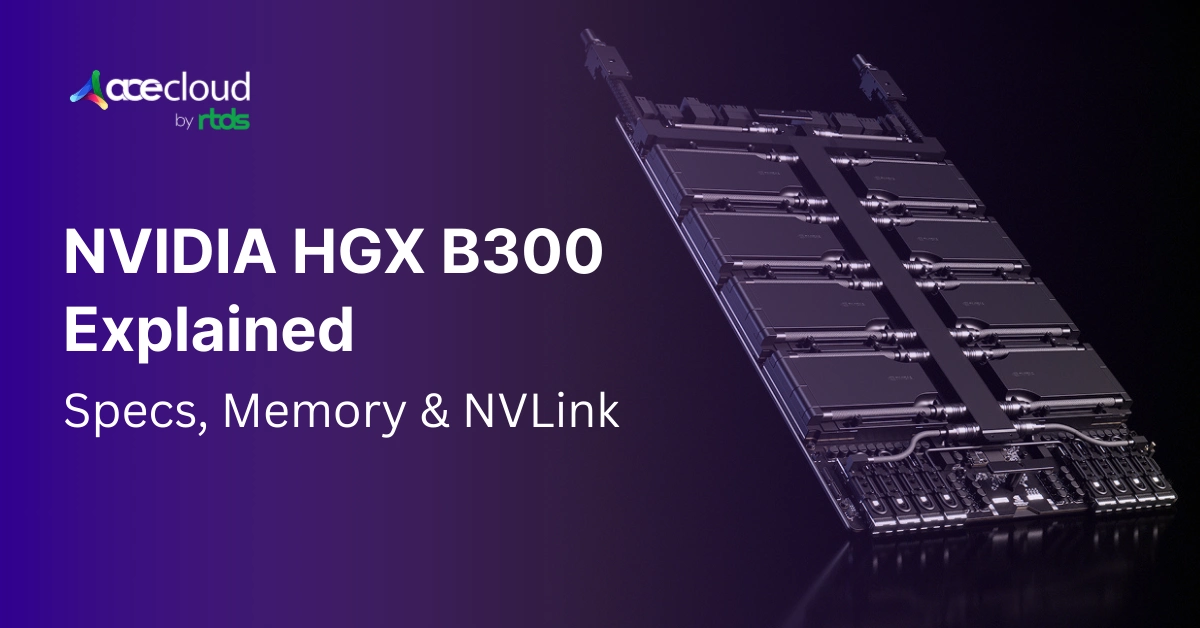
NVIDIA HGX B300: Specs, Architecture, and What Changes in 2026

AI infrastructure has entered a new phase as it is no longer just about raw FLOPS. Today, the key problems are memory capacity/bandwidth and scaling efficiency across many GPUs without turning your training into a network benchmark. In short, the bottleneck keeps moving, and it often moves toward memory and interconnect. That is the context […]

How to Build Agentic AI Failover in Multi-Cloud in 2026

Multi-cloud is no longer a strategy for us as it is a reality we wake up to every morning. Clients we work with usually come to us with their workloads spread across Amazon Web Services, Microsoft Azure, and Google Cloud, aka, the hyperscalers. They claim to do that for “better control” at cost, regulatory posture, GPU availability, […]