Your H200 compute just got 10% more affordable than ever before.
Get Startedright-arrow
Carolyn Weitz's profile image

Carolyn Weitz

Carolyn began her cloud career at a fast-growing SaaS company, where she led the migration from on-prem infrastructure to a fully containerized, cloud-native architecture using Kubernetes.
Since then, she has worked with a range of companies from early-stage startups to global enterprises helping them implement best practices in cloud operations, infrastructure automation, and container orchestration. Her technical expertise spans across AWS, Azure, and GCP, with a focus on building scalable IaaS environments and streamlining CI/CD pipelines.
Carolyn is also a frequent contributor to cloud-native open-source communities and enjoys mentoring aspiring engineers in the Kubernetes ecosystem.

Kubernetes CSI Volume Snapshots: How They Work, How to Restore, and How to Test

Indeed, CSI snapshots are storage-level, point-in-time copies exposed through Kubernetes APIs. They only work for PersistentVolumes provisioned by CSI drivers; in-tree volume plugins cannot use the CSI snapshot APIs. But reliable recovery also needs workload consistency and repeatable restore testing. As per CNCF’s annual survey, Kubernetes production use reached 80% in 2024, which means snapshot mistakes […]

Multi-Tier Backup Strategy with Block Storage and Object Storage: Snapshots, Vault, Archive

Most disaster recovery plans fail because teams optimize for backup creation, not verified recovery under stress. During an outage, missing runbooks, unclear ownership and slow restores can turn backups into unusable artifacts. IBM reports that the global average cost of such data breach is about $4.4M (2025), which shows why prevention alone is not a sufficient […]

10 Questions to Ask Before Choosing a VM Provider for AI Model Training

Quick Answer Before choosing a GPU cloud provider for AI training, verify the exact GPUs and capacity available, GPU interconnects, multi-node networking, storage throughput, failure recovery, dedicated versus shared resources, total training cost, security controls and software-stack compatibility. Benchmark your actual workload on the proposed infrastructure and compare time-to-target and cost per successful run instead […]

Kubernetes Deployment Strategies: From Rolling Updates to Blue-Green, Canary and Shadow

A Kubernetes deployment strategy is the plan you follow to move a new version into production without surprising your users. In Kubernetes, that plan matters because you are balancing delivery speed, service safety and the extra capacity you might need. Blue-green, canary and shadow are some of the K8 deployment strategies that usually depend on traffic management, […]

Cross Region Disaster Recovery for Stateful Cloud Native Applications

Cross-region disaster recovery (DR) helps stateful cloud-native applications stay available even if an entire region goes down. As organizations move fast with Kubernetes, managed databases, message queues and persistent volumes, a single cloud region failure can instantly take out the systems that hold your bookings, payments and customer state. Snapshots in one AZ and ad hoc […]

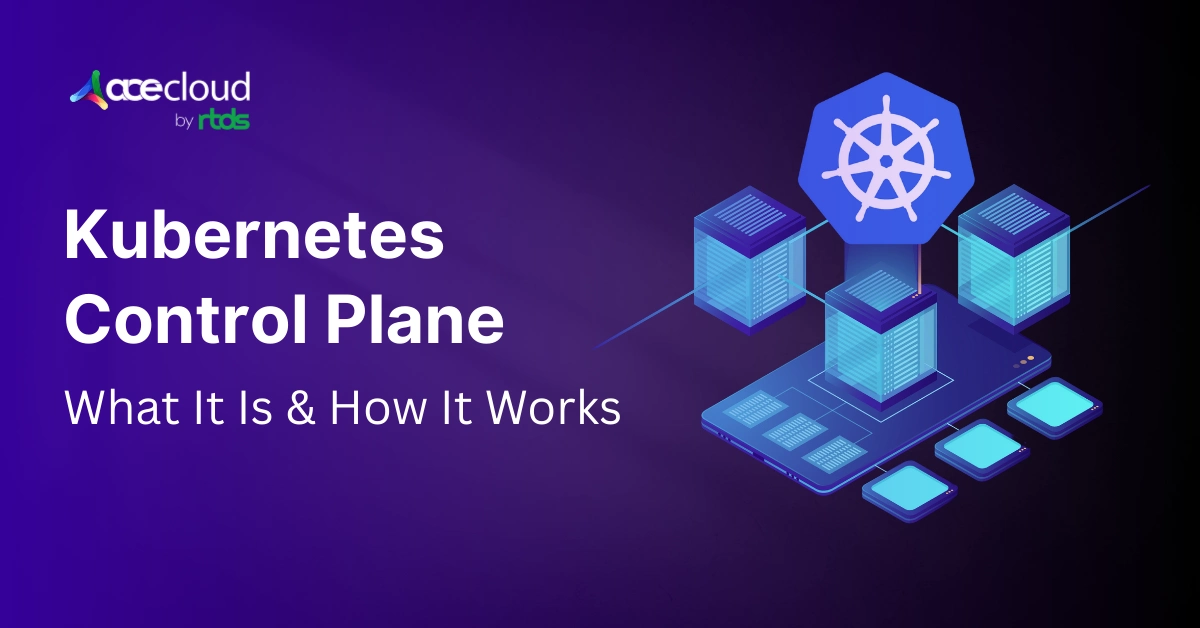
Kubernetes Control Plane: Components, Architecture & How It Works

Containers isolate applications and dependencies, which improves portability and release cadence across environments. However, orchestration is required to schedule containers, handle failures and expose services reliably. Kubernetes emerged to solve these needs through declarative APIs and reconciliation. At a high level, the Kubernetes control plane maintains desired state, schedules workloads and makes global decisions. To dive in, […]

MySQL vs PostgreSQL: A Workload Based Comparison for Modern Applications

MySQL and PostgreSQL are mature SQL-based relational database management systems used in production across web apps, SaaS platforms, operational analytics, reporting workloads, and cloud-native architectures. However, modern applications are no longer built around one simple workload. Redgate’s 2026 State of the Database Landscape found that 84% of organizations manage two or more database platforms, showing that modern database […]

Step-by-Step Guide to Kubernetes Deployment for Enterprise Applications

Kubernetes deployment is the standard for running containerized applications at enterprise scale, yet production reality introduces risk, compliance pressure, skill gaps and cost across multi team environments. According to a Portworx report, 41% of organizations currently have all or most of their applications on cloud native platforms and 82% plan to build most of their applications cloud […]

Comparing Best Managed Kubernetes Providers in India (2026)

Quick Answer Managed Kubernetes providers in India differ in regional availability, control-plane pricing, scalability, GPU support, reliability, and ecosystem fit. GKE, EKS, and AKS suit enterprises already invested in Google Cloud, AWS, or Azure, while AceCloud stands out for India-hosted, GPU-intensive AI/ML workloads. The right choice depends on workload needs, cloud strategy, support expectations, and […]

Terraform vs Kubernetes Key Differences, Use Cases, and Integration Strategies

You often see Terraform and Kubernetes grouped together, which blurs boundaries and complicates ownership during incidents. This is concerning as CNCF’s latest annual survey shows that cloud native adoption reached 89% in 2024, and 91% of organizations use containers in production. What’s the Difference Between Terraform and Kubernetes? Terraform and Kubernetes both support application delivery and operations, […]