Your H200 compute just got 10% more affordable than ever before.
Get Startedright-arrow
Carolyn Weitz's profile image

Carolyn Weitz

Carolyn began her cloud career at a fast-growing SaaS company, where she led the migration from on-prem infrastructure to a fully containerized, cloud-native architecture using Kubernetes.
Since then, she has worked with a range of companies from early-stage startups to global enterprises helping them implement best practices in cloud operations, infrastructure automation, and container orchestration. Her technical expertise spans across AWS, Azure, and GCP, with a focus on building scalable IaaS environments and streamlining CI/CD pipelines.
Carolyn is also a frequent contributor to cloud-native open-source communities and enjoys mentoring aspiring engineers in the Kubernetes ecosystem.

Unlocking the Power of High-Performance Computing (HPC): A Comprehensive Guide

When simulations take weeks, model training slows down and analytics miss deadlines. Teams reach the limits of one server. High-performance computing (HPC) uses clusters of advanced systems. It runs simulations, performs computations and analyzes data much faster than standard servers. HPC divides tasks into smaller parts. Then, it runs them at the same time. This […]

How Can Call Centers Benefit from Cloud Technology?

Cloud computing, till a very recent time in the past, was confined to businesses and large enterprises which required significant computing solutions, besides influencing the individual consumer segment to a small degree.

What is Virtual Machine in Cloud Computing?

Relying on physical servers to host websites, applications, and test environments can be expensive, slow to provision, and difficult to scale. Businesses may need to purchase hardware, configure it manually, and maintain capacity that remains unused when demand is low. Virtual machines address these challenges by allowing teams to provision independent computing environments on shared […]

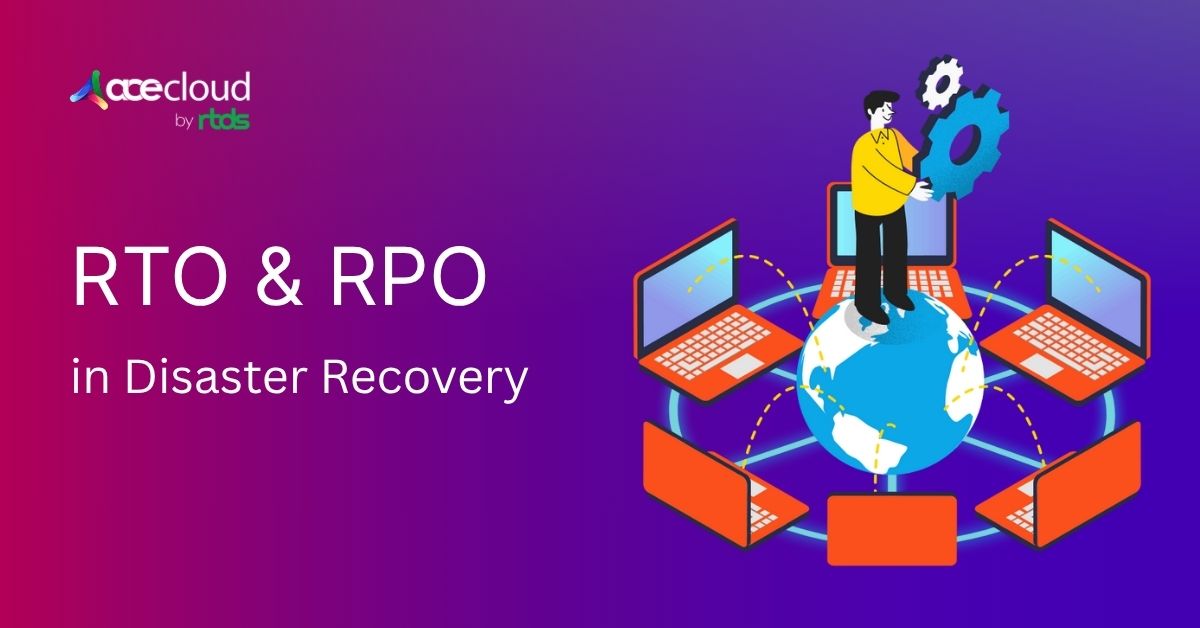
RTO and RPO in Disaster Recovery: Why It Matters for Cloud Workloads?

Before selecting architectures, you need clear disaster-recovery targets that reflect today’s outage and ransomware realities. The differences between Recovery Time Objective (RTO) vs (RPO) Recovery Point Objective in disaster recovery are critical so business tolerance can be expressed in minutes and translated to architecture. You see, outages are less frequent but far more expensive, with […]

Configuring Cloud Load Balancer for Multi-Region Deployments and Failover

The cloud load balancer adoption is accelerating as enterprises expand into multi‑region cloud strategies to meet reliability and compliance targets. When it comes to distributing workloads globally, you must design fault‑tolerant architectures that withstand regional disruptions while maintaining predictable performance. Consequently, multi‑region load balancing becomes a foundational control plane for routing, health enforcement and failover […]

Auto Scaling vs Load Balancing: Key Differences Explained

Tracking performance, reliability and cost under unpredictable traffic is a problem you cannot ignore. Therefore, you need a control plane that not only spreads traffic safely but also aligns capacity to demand. And for that, you will have to understand how autoscaling and load balancers work. ITIC’s recent report claims that 90% of firms say one hour […]

Cloud Storage Classes Explained Standard, Infrequent, and Archive

Selecting the correct cloud object storage class determines how much you spend, how fast you can read data and how often it is available. For example, major providers engineer for roughly 11-nines* durability by spreading objects across hardware and zones. Amazon’s AWS and Google state 99.999999999 percent durability, while Azure’s (LRS) Locally Redundant Storage targets similar durability characteristics within a region, then adds […]

From On-Prem to IaaS – A Step-by-Step Migration Guide for AI Teams

IaaS (Infrastructure-as-a-Service) migration is the process of moving IT resources, applications and data from on-premises infrastructure to IaaS, a cloud computing model. Migrating AI Workloads to IaaS isn’t just cost-effective, it’s about unlocking agility, scalability and operational precision. According to a recent survey, IaaS will account for 29 percent of the cloud market by 2030. Most modern […]

Provisioning Compute in the Cloud: A Step-by-Step Guide for DevOps Teams

Modern DevOps teams win when they can turn an idea into reliable compute capacity quickly, safely and with predictable cost. As a result, cloud compute provisioning deserves a disciplined approach that blends speed with governance, observability and financial control. In this guide you will learn a provider-agnostic process that helps you launch instances confidently, avoid […]