Quick Answer
AWS Trainium3 is best suited to AWS-native teams focused on cost-efficient training and inference, while Google Ironwood TPU targets large-scale inference within Google Cloud. NVIDIA Blackwell offers the broadest software ecosystem, framework support, and deployment flexibility. The right choice depends on workload type, cloud strategy, engineering expertise, performance needs, and total cost of ownership.
With AI making significant inroads, the global AI accelerator market size that was valued at USD 33.69 billion in 2025 is expected to grow to USD 309.23 billion by 2034. The growing demand for high-performance hardware solutions that power AI applications coupled with usage & buying of AI chips by cloud providers are the major factors contributing to this growth.
The market, long dominated by NVIDIA, has traditionally followed a model where AI companies rent NVIDIA GPUs from the best-suited cloud provider, deploy the model, and scale resources as demand grows. However, the AI cloud market is no longer about just renting NVIDIA GPUs!

Figure 1: AI Accelerator Market Size [Image Source]
With AI inference accounting for roughly two-thirds of AI compute spend, hyperscalers are turning to custom silicon to reduce costs, dependence on NVIDIA, and improve performance per watt. Forecasts suggest that NVIDIA’s share of the AI inference market may plummet from more than 90 percent to between 20 and 30 percent by 2028. This shift is largely driven by the rapid evolution of custom hyperscaler ASICs, including Amazon’s Trainium, Google’s TPUs, and Microsoft’s Maia.
In this blog, we compare Blackwell from default ecosystem leader NVIDIA and its alternatives like Trainium3 and Ironwood TPU across architecture, workload fit, software ecosystem, lock-in, and price-performance to help buyers choose the right AI silicon for their needs.
AWS Trainium3 Deep Dive
Manufactured using an advanced 3nm process node, AWS Trainium3 represents Amazon’s third generation of custom-built accelerators designed specifically for AI training and inference workloads. As stated in the official Trainium documentation, this purpose-built AI chip was developed with the goal to achieve the best economics for high performance AI training and inference at scale.
Exclusive to the AWS infrastructure, AWS Trainium3 is available only through services like EC2 Trn3 instances and SageMaker. As seen in the AWS Trainium3 architecture diagram, it uses a dual chiplet design. Each chiplet houses four NeuronCore-v4 cores totalling to eight cores per chip.
Each NeuronCore-v4 operates as a fully independent and heterogeneous compute unit built around four specialized engines: Tensor, Vector, Scalar, and GPSIMD. It also features software-managed on-chip SRAM to optimize data prefetching and maximize data locality.
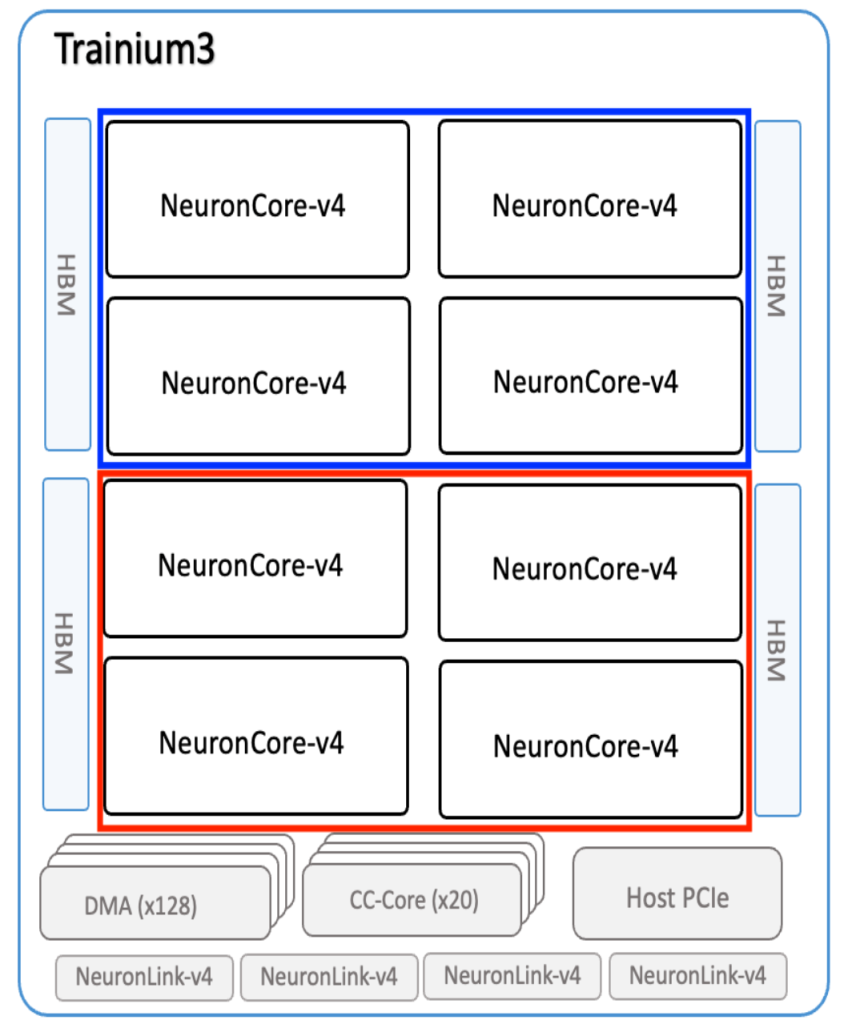
Figure 1: AWS Trainium3 Architecture Diagram [Image Source]
Key specifications per chip include:
- Compute Power: 2.52 PFLOPS (MXFP8/MXFP4)
- Memory Capacity: 144 GB HBM3e
- Memory Bandwidth: 4.9 TB/s
- Interconnect: NeuronLink-v4 for high-speed interconnectivity between chips
The NeuronCore-v4 Engine
The NeuronCore-v4 engine facilitates advanced control flow and dynamic shapes, while offering highly programmable rounding modes including RNE and stochastic-rounding. By pairing near-memory accumulation with 32 MiB of software-managed on-chip SRAM, NeuronCore-v4 enhances data prefetching and locality.
Equipped with a power-optimized systolic array, its Tensor Engine handles matrix multiplications (GEMM), convolutions, and transpose tasks in an efficient manner. This helps deliver up to 315 TFLOPS in MXFP8 and MXFP4 formats, along with support for structured sparsity, BF16, FP16, TF32, and FP32.
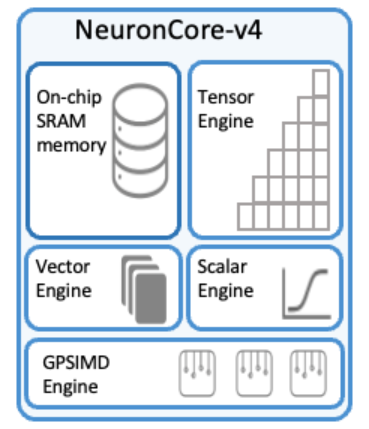
Figure 2: NeuronCore-v4 Architecture Diagram [Image Source]
Operating in parallel, the Vector and Scalar Engines process vector and scalar workloads at 1.2 FP32 TFLOPS each. In addition, the Vector Engine supports MXFP8 quantization along with accelerated exponential evaluation.
Custom C/C++ operators can be executed directly on the NeuronCore using the GPSIMD Engine, which features eight programmable 512-bit vector processors.
Amazon EC2 Trn3 UltraServers
Amazon EC2 Trn3 instances are accelerated computing instances powered by Trainium3 AI chips. These are Purpose-built to deliver the best token economics for next gen agentic, reasoning, video generation applications, and AI inference.Trn3 is available in two UltraServer scale-up configurations:
- Gen1 with 64 Trainium3 chips per UltraServer
- Gen2 with 144 chips per UltraServer
Note: We would keep our discussion limited to the EC2 Trn3 Gen2 UltraServer.
An EC2 Trn3 Gen2 UltraServer integrates 144 Trainium3 devices across 36 individual servers, with four devices per server. While intra-server device communication is managed by a primary NeuronSwitch-v1, cross-server interconnectivity is enabled via dual secondary NeuronSwitch-v1 switches combined with NeuronLink-v4. Together, these UltraServers offer 20 TB of HBM capacity, 706 TB/s of HBM bandwidth, and 362 PetaFLOPS of dense MXFP8 computing power.
Trn3 UltraServers transition from the point-to-point NeuronLink topology used in Trn1 and Trn2 to a PCIe switch-based fabric, enabling versatile all-to-all interconnectivity. Each server sled houses four Trainium3 chips, with intra-server PCIe switches delivering 256 GB/s of bidirectional bandwidth per chip.
Inter-server PCIe switches within a rack deliver 320 GB/s of bidirectional bandwidth per chip, supporting collective operations like all-gather and all-reduce. Addressing in Trn3 relies on routing where PCIe addresses directly specify the chip, server, and rack destinations.
Routing is completely transparent to machine learning workloads, as the Neuron Runtime and compiler handle switch configuration and address encoding automatically. Additionally, hardware semaphores coordinate remote HBM transfers to guarantee that completion signals and data navigate along the identical physical path.
As far as reliable and secure scalable distributed AI training is concerned, the new racks deliver over 2x the chip density compared to Trn2, increasing compute per rack and improving data center efficiency.
AWS Trainium3 chips are optimized to deliver the best token economics for next-generation agentic, reasoning, and video generation applications. As per the official documentation, Trn3 UltraServers deliver over 4x better energy efficiency than Trn2 UltraServers, and on Amazon Bedrock.
During real-world deployment, Trn3 delivers more than 5× the output tokens per megawatt compared to the Trn2 UltraServer without sacrificing user latency, enabling you to achieve sustainability goals while maintaining top-tier performance.
AWS Neuron SDK integration
AWS Neuron is an open-source SDK enabling high-performance deep learning and generative AI using AWS Inferentia and Trainium accelerators. The Neuron SDK allows developers to build, profile, and roll out machine learning workloads across accelerated EC2 instances, including Inf1, Inf2, Trn1, Trn2, and Trn3.
AWS added the support for Trainium3 UltraServer in Neuron SDK 2.27.0. As a part of the release, the following components were released with expanded open-source components:
- Neuron Explorer tools suite for unified profiling
- Enhanced NKI with open source NKI Compiler built on MLIR (Multi-Level Intermediate Representation)
- NKI Library of optimized kernels
- Native PyTorch support through TorchNeuron, and
- Neuron DRA for Kubernetes-native resource management
As mentioned in the Trainium3 architecture guide for NKI, the Tensor Engine in Trainium3 is optimized for tensor computations such as GEMM, CONV, and Transpose. Operating as an OCP-compliant data format, MXFP8/MXFP4 allows a single NeuronCore-v4 Tensor Engine to provide up to 315 TFLOPS of compute power.
Neuron includes the Neuron graph compiler, runtimes, training and inference libraries. It supports integration with popular frameworks like PyTorch, JAX, and the Neuron Kernel Interface (NKI) for low-level kernel optimization.
The Neuron SDK acts as the essential software layer for Trainium3, unlocking and fine-tuning the hardware’s advanced capabilities. While Trainium3 delivers the underlying hardware acceleration, the AWS Neuron SDK furnishes the essential software stack enabling frameworks and AI workloads to fully leverage that underlying hardware.
Trainium3 integrations
Apart from the integration with the Neuron SDK, Trainium3 also integrates well with the broader AWS AI and compute ecosystem (i.e., Amazon SageMaker, Amazon EKS, Amazon ECS, AWS Batch, and AWS ParallelCluster).
Managed model training and deployment are handled by Amazon SageMaker, whereas containerized workloads are supported through EKS and ECS. Meanwhile, AWS ParallelCluster enables HPC-style cluster management, and AWS Batch takes care of batch-oriented job scheduling.
For more information on the integrations, we recommend you to check official Amazon EC2 Trn3 UltraServers documentation.
Trainium3 Performance and Token Economics
Compared to the Trn2 UltraServers, Trn3 delivers up to 4.4x greater performance, 3.9x higher memory bandwidth, and 4x improved energy efficiency (performance per watt), delivering superior price-performance for training and deploying frontier-scale models. This includes reinforcement learning, Mixture-of-Experts (MoE), reasoning, and long-context architectures.
Trainium3 is optimized to deliver the best token economics for next-generation agentic, reasoning, and video-generation applications. At comparable user latency, Trainium3 additionally achieves a more than fivefold increase in output tokens per megawatt relative to the Trn2 UltraServer.
Google Ironwood TPU Deep Dive
Introduced at Google Cloud Next 25, Google Ironwood TPU (Tensor Processing Unit) is the seventh-generation TPU (internally TPU7x) from Google. This scalable purpose-built AI accelerator was specifically designed for AI Inference, rather than model training.
Google Ironwood TPU is designed to support the next phase of Gen-AI and computational and communication requirements. It scales to as many as 9,216 liquid-cooled chips connected via groundbreaking Inter-Chip Interconnect (ICI) networking that operates across nearly 10 MW. As a key addition to theGoogle Cloud AI Hypercomputerframework, it co-optimizes hardware and software systems to power the most intensive AI workloads.
Developers can leverage the benefits offered by Pathways software stack to harness the immense computing and scaling capabilities of Ironwood TPUs. Ironwood TPUs are one of the many components of the Google Cloud AI Hypercomputer architecture that is used for optimization of hardware and software for most-demanding AI workloads.
Salient Features of Google Ironwood TPU
Here are some of the major features of the Google Ironwood TPU:
Inference-focused architecture
Engineered to efficiently handle complex computational and communication workflows, Ironwood excels at serving advanced “thinking models,” including Mixture of Experts (MoEs), LLMs, and complex reasoning workloads.
All the latest AI models require massive parallel processing and efficient memory access, with Ironwood TPUs ticking both the boxes! Low-latency and high bandwidth ICI networks are designed for minimizing data movement and latency across chips. Owing to this, it supports coordinated, synchronous communication at full TPU pod scale.
Massive Scale
As stated in the Official Google blog, Ironwood TPUs come in two different sizes depending on the workload demands, a 256 chip configuration and a 9,216 chip configuration.
When scaled to 9,216 chips per TPU pod for a total of 42.5 Exaflops, Ironwood supports more than 24x the compute power of El Capitan, the world’s largest supercomputer. Delivering an impressive peak compute of 4,614 TFLOPs per single chip, it marks a monumental leap in AI processing capabilities. All of this helps models to scale across a tightly interconnected system.
Substantial Increase In High-Bandwidth Memory (HBM)
Ironwood provides 192 GB of capacity per chip, a 6x expansion over its predecessor Trillium. This helps minimize frequency of data movement and boosts performance, allowing larger datasets and models to be processed efficiently.
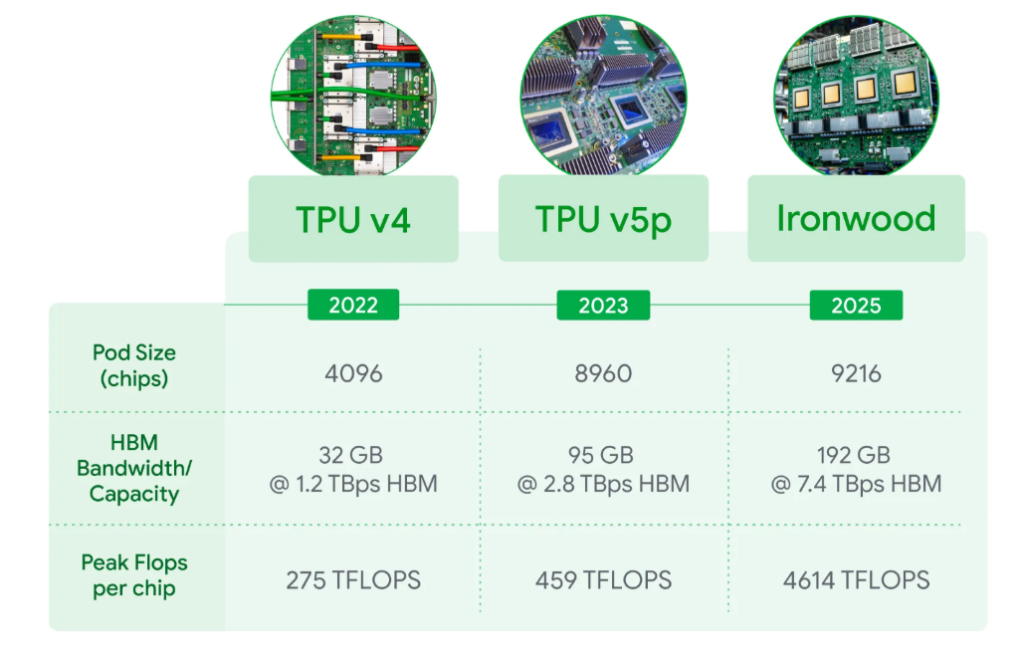
Figure 3: Google’s TPU power efficiency relative to the earliest generation Cloud TPU [Image Source]
Highly improved HBM bandwidth, reaching 7.37 TB/s per TPU chip ensures rapid data access, a factor that is significant for memory-intensive AI workloads.
Enhanced Inter-Chip Interconnect (ICI) Bandwidth
Each Ironwood TPU chip features 1.2 TB/s of bidirectional Inter-Chip Interconnect (ICI) bandwidth, facilitating seamless, high-speed communication throughout expansive TPU cluster deployments. This helps facilitate efficient distributed training and AI inference at scale.
Improved Performance and Efficiency
Engineered to maximize energy efficiency for extensive AI tasks, Ironwood achieves an impressive FP8 performance of up to 4,614 TFLOPs per chip.
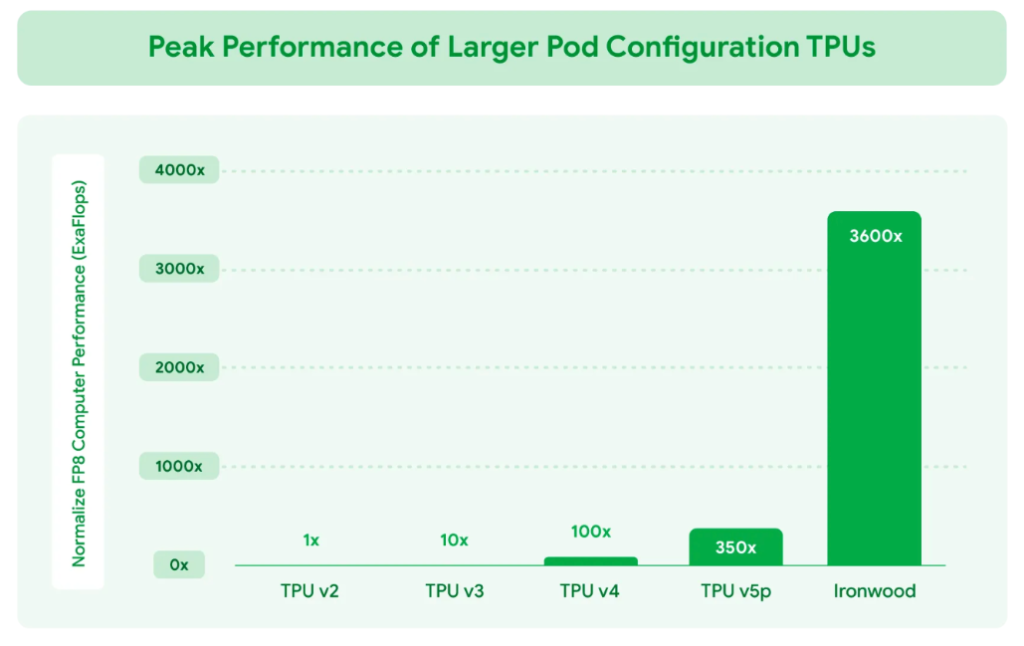
Figure 4: Improvement in the total FP8 peak flops performance relative to TPU v2 [Image Source]
Enhanced SparseCore for Embedding and Specialized Workloads
Additionally, Ironwood includes an upgraded SparseCore, a dedicated accelerator engineered to handle massive embeddings typical of modern recommendation and ranking workloads.
With broadened SparseCore capabilities, Ironwood extends acceleration beyond standard AI applications into specialized areas such as scientific and financial computations.
Integrated Software Stack
While Pathways (Google’s own ML runtime) functions as the distributed runtime layer to seamlessly scale and orchestrate workloads across TPU chips, Ironwood offers native optimization for frameworks like JAX, PyTorch, XLA, and Pallas.
Through Google Cloud, Pathways allows workloads to extend past an individual Ironwood Pod, coordinating up to hundreds of thousands of Ironwood processors to handle massive generative AI tasks.
Google Ironwood TPU Architecture
Ironwood TPU (TPU7x) uses a dual-chiplet architecture, with each chip containing two chiplets. As seen in the architecture diagram, each chiplet has one TensorCore, two SparseCores, and 96 GB of GPU HBM.
TPU7x features a multi-tiered memory with each chip equipped with 192 GB of HBM, with bandwidth of approximately 7.37 TB/s. Throughput can be enhanced by accommodating larger batch sizes, which is facilitated by this extensive HBM capacity.
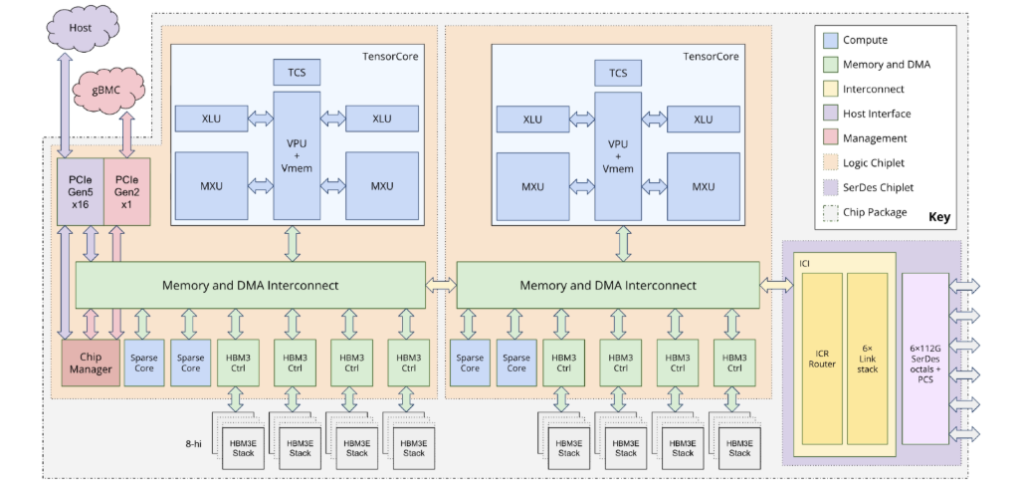
Figure 5: System Architecture – Google Ironwood TPU [Image Source]
Utilizing a 3D torus interconnect topology, TPU7x chips enable slices to scale to as many as 9,216 chips. Within a pod, inter-chip communication is facilitated by a bi-directional bandwidth of 200 GBps along each axis.
TPU kernel performance is optimized through VMEM, a high-speed on-chip SRAM that balances memory distribution between executing current operations and prefetching upcoming weights. Allocating additional VMEM to active operations allows for larger tile sizes, which minimizes memory stalls and boosts overall execution speed.
By bringing together high-bandwidth memory capacity, Optical Circuit Switches (OCS), ICI networking, and the Data Center Network (DCN) infrastructure, Ironwood seamlessly unifies thousands of individual TPU processors to function as a cohesive, high-performance AI supercomputing system.
To summarize, the Ironwood TPU (TPU7x) integrates dual chiplets, high-bandwidth HBM, dedicated TensorCores and SparseCores, along with a 3D torus interconnect. This creates a highly scalable architecture suited for training and inference across massive dense and MoE models.
NVIDIA GB200: A Deep Dive into Blackwell Architecture
Engineered for large-scale AI inference and training workloads, the NVIDIA GB200 belongs to the Blackwell generation of GPUs with NVIDIA Grace CPUs. It provides significant enhancements in processing capabilities, memory bandwidth, and power efficiency compared to the Hopper-based systems.
Prior to the Blackwell architecture, the GPUs from NVIDIA primarily employed a monolithic (or single-die) GPU design. Here, a single silicon die contains all the essential components such as the Streaming Multiprocessors (SMs), cache, memory controllers, and graphics engines. The Multi-Chip Module (MCM) design overcomes these limitations with the multi-die GPU architecture.
Each Blackwell GPU, including the B200 GPU used in the GB200 platform, features a multi-die architecture, integrating two dies that together encompass 208 billion transistors. These dies are linked via NVIDIA’s proprietary NV-HBI (NV-High Bandwidth Interface), delivering up to 10 TB/s of die-to-die bandwidth to operate seamlessly as a single GPU. Fabrication of the dies relies on TSMC’s custom 4NP process technology.
GB200 NVL72, GB200 NVL36, etc. are some of the different configurations of NVIDIA GB200.
Architecture of NVIDIA GB200
Before we deep dive into the major features offered by the GB200 GPU, we look at the architecture of GB200 Grace Blackwell Superchip, the fundamental building block of the GB200 platform.
Designated as a superchip, it integrates two NVIDIA Blackwell GPUs alongside a Grace CPU. This unified system leverages the dual strengths of both processors: the GPUs execute massive parallel computation, while the CPU handles intricate logic and orchestrates data movement.
You can refer to our detailed blog on NVIDIA Blackwell architecture for a deeper discussion of the Blackwell GPU architecture. Here, our discussion is confined to the GB200 and its Grace Blackwell Superchip architecture.
Comprising two NVIDIA Grace CPUs alongside other integrated components, the NVIDIA Grace CPU Superchip is purpose-built for AI and high-performance computing. Unlike standard general-purpose processors, Grace is tailored to manage the extensive datasets and intensive computations characteristic of modern AI workloads.
Every GB200 Grace Blackwell Superchip integrates a single NVIDIA Grace CPU alongside a pair of Blackwell GPUs. The Grace CPU features 72 Arm Neoverse V2 cores. Arm Neoverse V2 is a 64-bit Armv9 CPU architecture designed for cloud computing, High-Performance Computing (HPC), and machine learning workloads.
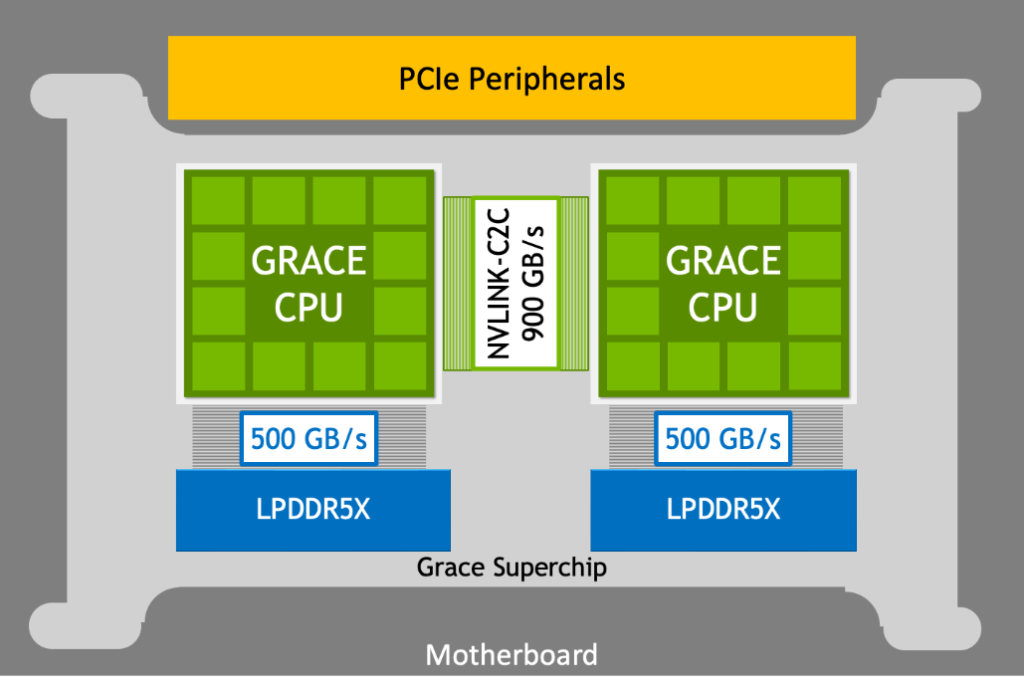
Figure 6: NVIDIA Grace CPU Superchip with 900 GB/s NVLink-C2C [Image Source]
Within the GB200 Grace Blackwell Superchip, the high-speed NVLink-C2C interconnect establishes a direct, high-capacity connection between the Grace CPU and the two Blackwell GPUs. To ensure that all the chip’s CPU cores work efficiently and realize fast data movement, NVIDIA uses a mesh fabric and distributed cache architecture called Scalable Coherency Fabric (SCF) which helps scale cores and network bandwidth.
The SCF delivers more than 3.2 TB/s of total bisection bandwidth, maintaining seamless data flow across system I/O, memory, NVLink-C2C, and CPU cores.
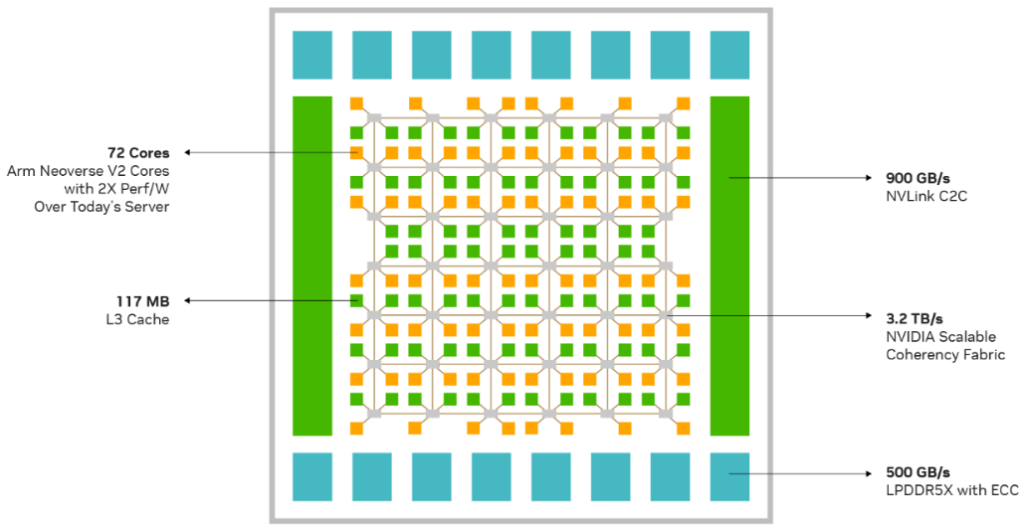
Figure 7: Deep dive into SCF [Image Source]
Across its two Grace CPU chips, the Grace CPU provides 228 MB of distributed L3 cache to facilitate rapid retrieval of frequently used data. To optimize data transport, it utilizes a mesh network that interlinks system I/O, CPU cores, and distributed caching via Cache Switch Nodes (CSN).
Covering all aspects of the NVIDIA GB200 is beyond the scope of this blog. For an in-depth look at the Grace CPU architecture, we recommend checking out NVIDIA’s detailed Grace CPU Superchip Architecture In Depth blog.
Salient Features of NVIDIA Blackwell (GB200)
The GB200 is not a GPU in the traditional sense. As discussed earlier, GB200 is NVIDIA’s Grace Blackwell Superchip: two B200 GPUs and one Grace ARM CPU on a single package, connected by NVLink-C2C at 900 GB/s.
Here are some of the salient features that make the GB200 well-suited for modern AI training and inference:
GB200 NVL72 Rack-Scale Design
The GB200 NVL72 extends the GB200 Grace Blackwell Superchip into a rack-scale system. It packs 72 B200 GPUs, 36 Grace ARM CPUs, 13.4 TB of unified GPU memory, and 1.44 exaflops of FP4 compute into a single liquid-cooled rack.
The GPUs are operated as a tightly interconnected compute system that can be leveraged for large-scale AI training and inference.
72-GPU NVLink Domain and NVLink Switch
A major feature of the NVL72 is its 72-GPU NVLink domain owing to which all 72 Blackwell GPUs operate as a unified accelerator from the perspective of large-scale AI workloads. The NVLink 5.0 switch fabric is what helps transform 72 B200 GPUs into a unified accelerator.
Each B200 GPU features 18 fifth-generation NVLink links, delivering up to 1.8 TB/s of bidirectional throughput per GPU. NVLink Switch System provides 130 TB/s of low-latency GPU communications for AI and high-performance computing (HPC) workloads.
CUDA Ecosystem Advantage
GB200 is a native part of the CUDA ecosystem, since it uses NVIDIA’s own Blackwell GPUs. Each Blackwell GPU in GB200 runs CUDA natively, avoiding the need of any translation or compatibility layer.
This gives a significant advantage over non-NVIDIA GPUs, as GB200 has 100 percent compatibility with the CUDA-X ecosystem, including libraries such as cuDNN, TensorRT, and NCCL. This ecosystem also helps developers carry existing CUDA applications to Blackwell while leveraging the benefits offered by the underlying architecture and integration with major ML frameworks like PyTorch, JAX, and TensorFlow.
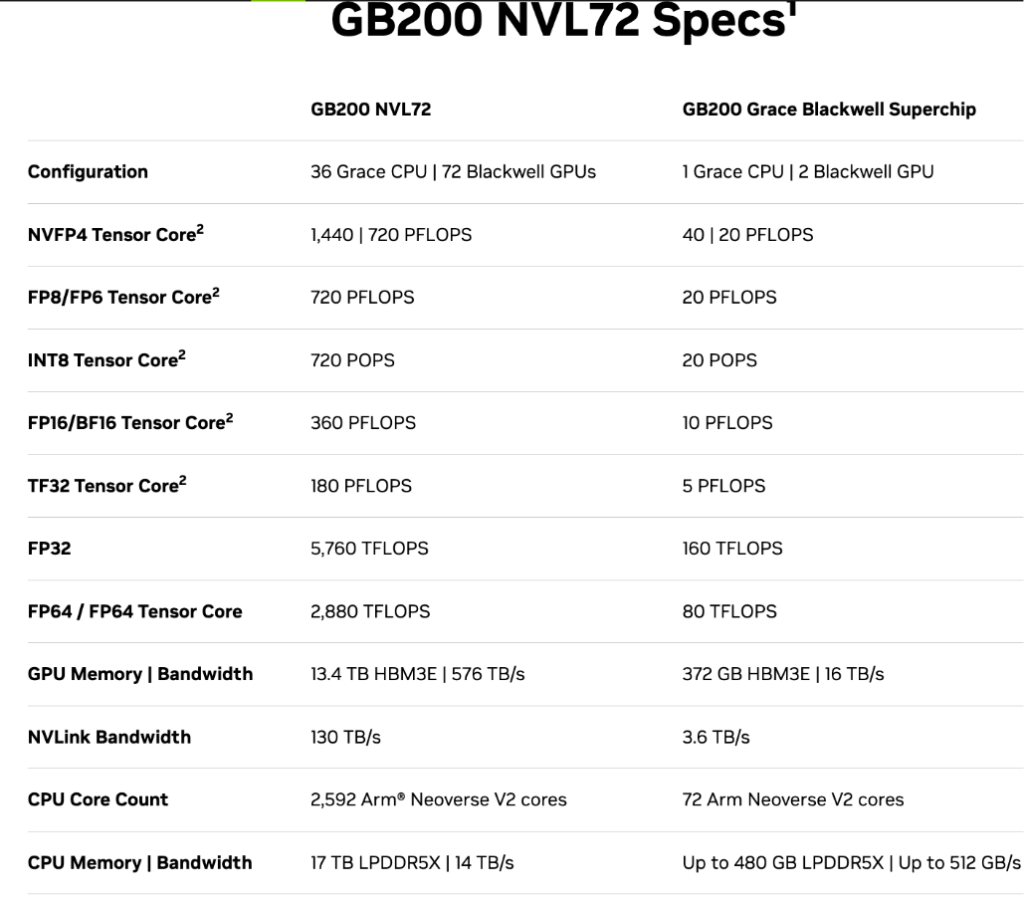
Figure 8: GB200 NVL72 system-level specifications [Image Source]
Blackwell Tensor Cores
GB200 incorporates fifth-generation Blackwell Tensor Cores, purpose-built to accelerate the matrix operations. The second-generation Transformer Engine in Blackwell adds native support of the FP4 precision, alongside the already-supported FP64, TF32, BF16, FP16, FP8, INT8, and FP6precisions.
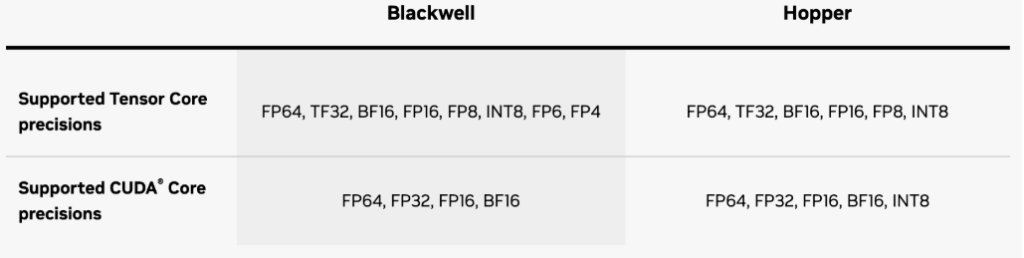
Figure 9: Supported precisions [Image Source]
Blackwell’s second-generation Transformer Engine adds FP4/NVFP4-class low-precision execution that can materially increase throughput and reduce model-memory requirements versus higher-precision paths.
The flexibility to choose from so many precisions allows applications to select an appropriate balance between performance, memory usage, and numerical precision.
FP4 and FP8 Implications
GB200 incorporates fifth-generation Blackwell Tensor Cores, purpose-built to accelerate the matrix operations. The second-generation Transformer Engine (TE 2.0) in Blackwell adds native support of the FP4 precision, alongside the already-supported FP64, TF32, BF16, FP16, FP8, INT8, and FP6precisions.
Lower-precision formats (i.e., FP4 and FP6) help in reducing memory and bandwidth requirements while enhancing computational throughput. This enables accelerated LLM training, inference, and deployment of transformer models that effortlessly scale up to 10 trillion parameters.
The custom NVIDIA Blackwell Tensor Core technology combined with NVIDIA TensorRT-LLM and NeMo Framework, help in accelerating inference and training for LLMs and Mixture-of-Experts (MoE) models.
FP8, meanwhile, provides a higher-precision option than FP4 while still offering substantial throughput and memory-efficiency benefits for AI workloads.
Support across cloud providers and AI frameworks
Blackwell has broad support across the cloud and AI software ecosystem. NVIDIA announced Blackwell-powered offerings from major cloud providers such as AWS, Google Cloud, Microsoft Azure, and Oracle Cloud Infrastructure, alongside NVIDIA Cloud Partners such as CoreWeave, Crusoe, IBM Cloud, Lambda, and Nebius.
Developers and enterprises can also provision Blackwell-based GPUs on AceCloud, a provider of cloud Infrastructure-As-A-Service (IaaS) and GPU computing company. Built for the agentic AI era, AceCloud follows an infrastructure-based pricing model where users pay only for the compute, storage, and GPUs used for AI training and inference.
From a software standpoint, NVIDIA’s accelerated computing libraries and key AI frameworks offer comprehensive compatibility with Blackwell. For example, PyTorch and JAX have Blackwell support, while NVIDIA’s software stack includes CUDA, TensorRT, TensorRT-LLM, cuDNN, NCCL, and Transformer Engine for developing and optimizing AI workloads.
In summary, Blackwell represents a significant generational advancement over its predecessors. The features of the NVIDIA GB200 discussed above highlight its suitability for large-scale AI inference and training, especially for workloads demanding top-tier compute performance, seamless inter-GPU communication, and multi-GPU scalability.
AWS Trainium3 vs Google Ironwood TPU vs NVIDIA Blackwell
As seen so far, AWS Trainium3 and Google Ironwood TPU, both AI accelerators and NVIDIA’s Blackwell GPU represent three distinct approaches to scaling AI compute, combining specialized silicon with tightly integrated software and networking.
The question is which silicon out of the ones we covered best-suits your AI workloads? There is no clear winner, as the right platform depends on model architecture, engineering skills, framework dependency, deployment cloud, scaling requirements, and model cost.
Let’s compare the above platforms from the lens of (architecture + performance) and (platform + economics):
| Comparison Metrics: Architecture and Performance | |||
|---|---|---|---|
| Dimension | AWS Trainium3 | Google Ironwood TPU | NVIDIA Blackwell GPUs |
| Compute formats | FP8, FP4, etc. | TPU-optimized low precision | FP8, FP4, MXFP8, FP6, etc. |
| Memory | Capacity + bandwidth | Capacity + bandwidth | Capacity + bandwidth |
| Scale-up/Scale-out | NeuronLink + AWS fabric | TPU fabric + Pod architecture | NVLink + InfiniBand/Ethernet |
| Long context/MoE | Strong | Strong | Strong |
| Primary advantage(s) | Cost-efficient AI | Compute Inference efficiency at scale | Performance + flexibility |
| Comparison Metrics: Platform and Economics | |||
|---|---|---|---|
| Dimension | AWS Trainium3 | Google Ironwood TPU | NVIDIA Blackwell/GB200 |
| Software Maturity | Maturing and in growth phase | Mature TPU stack | Most mature |
| Framework Compatibility | PyTorch, JAX, etc. | JAX, PyTorch/XLA | Broadest: PyTorch, TensorFlow, JAX, etc. |
| Cloud Lock-In | AWS | Google Cloud | Multi-cloud + on-prem |
| Procurement/Availability | AWS capacity | Google Cloud capacity | Broadest: AWS, Azure, Google Cloud, Oracle Cloud, on-premises |
| Training vs inference economics | Strong cost focus | Strong inference focus | Strong across both: cost, AI training and inference |
| Operational Complexity | AWS + Neuron expertise | TPU expertise | Broad tooling: CUDA, NGC, TensorRT, with flexible infrastructure options |
As seen from the high-level comparison, Trainium3, Ironwood, and Blackwell take different approaches to AI infrastructure economics.
– AWS Trainium3 focuses on providing economical AI compute, seamlessly integrating with Neuron, AWS services, and the overarching AWS AI infrastructure ecosystem.
– Designed for scalable, highly efficient inference, Google Ironwood TPU features deep integration with Google’s AI stack, including Google Cloud, JAX, and XLA.
– NVIDIA Blackwell/GB200 offers the broadest combination of performance, framework support, deployment flexibility, and software maturity.
Choosing the Right AI Accelerator
Selecting the optimal accelerator requires evaluating total cost of ownership, deployment strategy, and specific workload needs alongside raw computational power. Here is a birds-eye view of all the three platforms:
| Platform | Provider | Best-known strength | Main ecosystem |
|---|---|---|---|
| Trainium3 | AWS | Cost-efficient training/inference in AWS | Neuron, SageMaker, EKS, Bedrock |
| Ironwood TPU | Google Cloud | Large-scale inference and “thinking models” | TPU, Pathways, JAX, AI Hypercomputer |
| Blackwell / GB200 | NVIDIA + cloud partners | Broad GPU ecosystem and rack-scale NVLink | CUDA, TensorRT-LLM, vLLM, NVLink |
Choose Trainium3 if the team is AWS-native, cost-sensitive, willing to optimize around Neuron, and running large-scale training or inference in AWS. On the other hand, Ironwood TPU should be your ideal choice if the team is Google Cloud-native, JAX/TPU-friendly, and running very large inference or reasoning workloads. The team can benefit massively from AI Hypercomputer integration.
Lastly, NVIDIA Blackwell should be your go-to AI accelerator if the team values ecosystem maturity, CUDA compatibility, broad model/framework support, and access to the largest base of AI infrastructure tooling. Portability across GPU cloud providers, such as AceCloud, is one of the major advantages of NVIDIA Blackwell GPUs since it provides organizations greater flexibility in choosing how and where they deploy AI workloads.
As the AI silicon market continues its rapid evolution, staying informed about these hardware advancements will be crucial for maintaining a competitive edge in AI deployment.