Multi-tenant Kubernetes is becoming a practical default for platform engineering because it enables shared infrastructure with varying levels of isolation, governance and tenant autonomy. But, not all tenancy models provide the same security boundary. Wiz found AKS clusters face a first attack attempt within 18 minutes, and EKS clusters within 28 minutes of creation. This is exactly why consistent, policy-driven guardrails matter more than ever when clusters are shared.
With this context in mind, it becomes crucial to consider one architectural decision that often determines whether your platform scales cleanly or collapses under operational noise: single-tenant clusters versus a multi-tenant Kubernetes platform.
If every new product team, staging environment, or proof of concept gets its own cluster, you inherit cluster sprawl, inconsistent security baselines and growing day-2 overhead.
Multi-tenancy offers a more sustainable pattern. You can consolidate workloads onto fewer, well-governed clusters while preserving boundaries through namespace isolation, virtual clusters and policy-driven controls. But namespace isolation should be treated as soft multi-tenancy, not hard tenant isolation.
What is Multi-Tenant Kubernetes?
Multi-tenancy in Kubernetes is the practice of partitioning a single Kubernetes cluster into multiple isolated environments. This design lets different teams or applications share the same underlying infrastructure while still preserving security boundaries, operational independence and predictable resource consumption.
A simple accommodation analogy helps clarify the tradeoff.
- Renting an entire house gives you maximum control, but you also take on all upkeep and cost. That is similar to running a dedicated Kubernetes cluster for every team or workload.
- Renting an apartment in a shared building gives you private space, while shared services like maintenance and common facilities are managed centrally. That is closer to how multi-tenant Kubernetes works.
Instead of provisioning a new cluster each time a new team or environment appears, you create separated tenant spaces inside one cluster.
Effective multi-tenancy rests on three pillars:
- Isolation: Clear security boundaries between tenants.
- Fair resource usage: Prevent noisy neighbor impact.
- Tenant autonomy: Enough self-service so teams can run workloads independently.
Which are the Best Multi-tenant Kubernetes Platforms?
Below is the list of the best platforms that represent the most proven approaches to Kubernetes tenant isolation, from namespaces to virtual clusters to fleet governance:
| Platform | Primary Tenancy Approach | Best When You Need | Tradeoff to Expect |
|---|---|---|---|
| vCluster | Virtual control plane per tenant | Stronger isolation than namespaces | Needs surrounding tooling for full platform experience |
| Rancher | Projects + multi-cluster governance | Central fleet ops across many clusters | Less focused on “virtual cluster” isolation |
| OpenShift | Enterprise platform + projects | Standardization, governance, compliance | Higher platform cost and complexity |
| KubeSphere | Workspace and project model + UI | Tenant-aware ops with integrated console | Less common in some enterprise buying motions |
vCluster
- Best for: Stronger tenant isolation on shared infrastructure when namespace segmentation feels too weak for your trust model.
- Why it stands out: Each tenant gets a virtual control plane with its own API server, which tightens control-plane boundaries.
- Strengths you can expect: Tenant autonomy that feels like “their own cluster” without dedicated-cluster cost and sprawl.
- Tradeoffs to plan for: vCluster is specialized, therefore you may still need surrounding tooling for broader platform orchestration.
- Pick vCluster when: Your priority is Kubernetes tenant isolation and efficient shared infrastructure and you can compose the rest.
Rancher
- Best for: Organizations managing many Kubernetes clusters that need centralized governance, visibility and consistent operations.
- Why it stands out: Projects group namespaces and help partition access, which supports multi-tenancy across clusters and teams.
- Strengths you can expect: Central management across environments, clearer policy organization and easier standardization at scale.
- Tradeoffs to plan for: It is weaker as a pure tenant-isolation story than a virtual-cluster-first approach.
- Pick Rancher when: You already live in a multi-cluster reality and you want centralized control without redesigning topology.
OpenShift
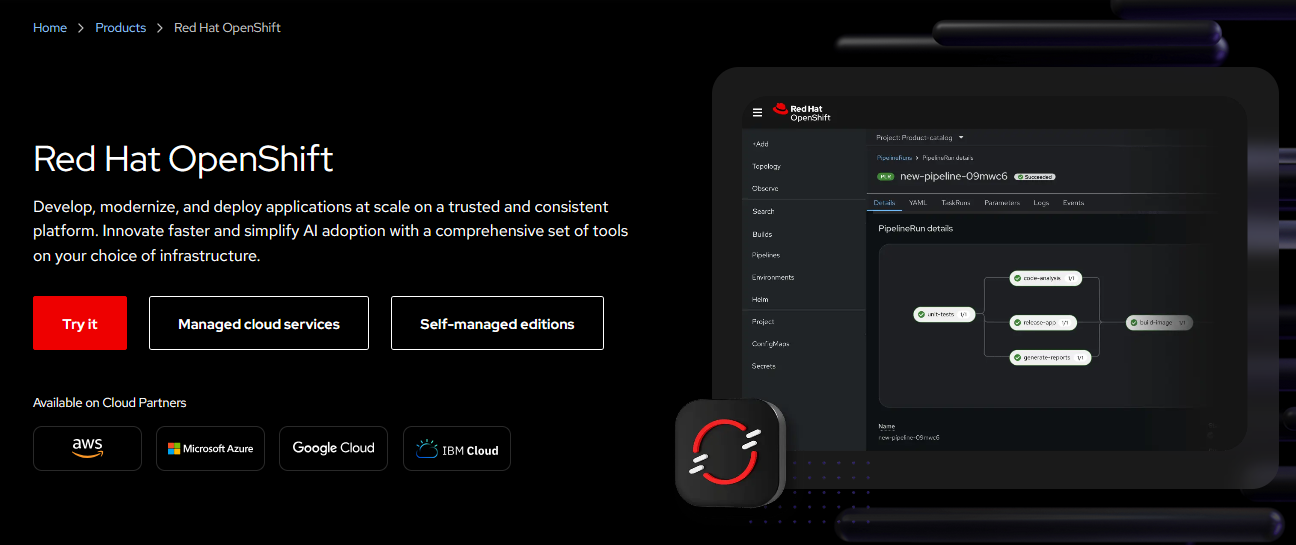
- Best for: Enterprises that prioritize governance, security controls and standardized workflows over lightweight tenancy.
- Why it stands out: Projects are the core isolation construct and the platform is designed for consistent operational patterns.
- Strengths you can expect: Strong guardrails, integrated workflows and enterprise support alignment for regulated environments.
- Tradeoffs to plan for: Platform complexity and cost can be higher than what namespace-based tenancy alone requires.
- Pick OpenShift when: Compliance, security posture and standardization drive the decision more than maximal flexibility.
KubeSphere
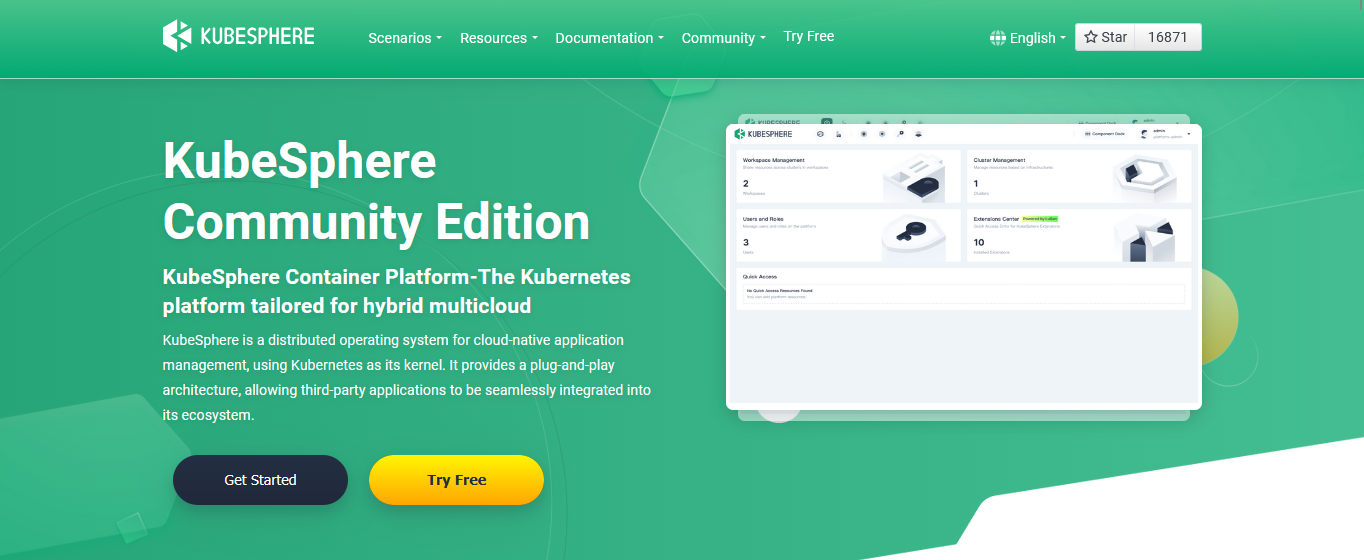
- Best for: Teams that want a multi-tenant Kubernetes platform with workspaces, role-based permissions and an integrated UI.
- Why it stands out: It is explicitly designed around multi-tenant operations, with permissions at platform, cluster, workspace and project levels.
- Strengths you can expect: Better usability, tenant-aware governance concepts, and integrated visibility that can reduce operational friction.
- Tradeoffs to plan for: It may be less common in some enterprise buying motions than Rancher or OpenShift. So, validate ecosystem fit, operator familiarity and long-term support expectations before standardizing on it.
- Pick KubeSphere when: You want a tenant-aware management layer that improves usability and provides an integrated operator experience.
How to Choose a Multi-tenant Kubernetes Platform?
Before picking a tool, align on how you define ‘best’ for your organization. Use these criteria as a fast evaluation checklist:
- Self-service model: How teams request environments, access, quotas and permissions.
- Policy enforcement: Guardrails via RBAC, admission policies and standardized templates.
- Network segmentation: Tenant-to-tenant traffic control and blast-radius reduction.
- Day-2 operations: Upgrades, monitoring, incident response and cost controls at scale.
- Tenant isolation strength: Soft vs hard multi-tenancy based on trust and compliance needs. Soft tenancy depends on namespaces/projects with strong policies; medium tenancy depends on virtual clusters; hard tenancy depends on dedicated clusters or separate infrastructure boundaries for higher-risk tenants.
Consolidating into fewer governed clusters reduces operational overhead and helps standardize security baselines, which is often a better long-term risk and cost posture than multiplying clusters per team.
A Practical Decision Model for Approval
Use this decision model to align technical choices with risk, cost and ownership boundaries.
Risk model
- Trusted internal teams can often start with namespace segmentation plus strong policies.
- Regulated or semi-trusted tenants usually require virtual clusters or separate clusters depending on CRD/operator blast radius and audit requirements.
- Untrusted or customer-facing tenancy should default to hard isolation assumptions first; shared-cluster tenancy is only acceptable when the full trust boundary has been explicitly evaluated.
Cost model
- Namespaces are lowest cost, but they require disciplined policy enforcement and operational maturity.
- Virtual clusters add overhead, but they reduce dedicated-cluster sprawl and improve tenant autonomy.
- Dedicated clusters cost more, but they reduce blast radius and simplify compliance narratives.
Operating model
- Define who owns upgrades, add-ons, policy changes and incident responses per tenant boundary.
- Confirm how identity, audit logs and access reviews work across tenants and clusters.
What are the Minimum Guardrails for Multi-tenant Kubernetes?
Regardless of platform choice, multi-tenant Kubernetes is only sustainable when these baseline controls are standardized:
- Namespace isolation + RBAC: Least privilege per team or tenant.
- ResourceQuotas + LimitRanges: Prevent noisy neighbor resource exhaustion.
- NetworkPolicies: Default-deny with explicit allow rules for approved traffic.
- Admission controls/policy enforcement: Enforce security posture consistently.
- Auditability and ownership boundaries: Clear tenant ownership for incident response.
Identity and audit integration you should not skip
- Central identity via OIDC or SSO-backed access, with role mappings that match team structure.
- Access reviews for elevated permissions, with time-bounded break-glass procedures.
- Audit log retention and forwarding to a SIEM for investigation and compliance reporting.
Supply chain and admission policy examples you can enforce
- Block privileged pods and hostPath mounts unless explicitly approved for a tenant.
- Require signed images or approved registries and enforce pinned image digests for production.
- Enforce baseline security contexts and validate required labels for ownership and cost allocation.
Day-2 Operations Checklist for Multi-Tenant Kubernetes
This is where most platforms succeed or fail in the long term.
- Observability per tenant: Metrics, logs, traces scoped to a tenant boundary.
- Cost allocation: Showback/chargeback per namespace, project or virtual cluster.
- Upgrade strategy: Kubernetes versioning, add-on upgrades and tenant disruption controls.
- Incident response: Ownership, escalation paths and audit trails per tenant.
- Noisy neighbor handling: Quota tuning, QoS classes, eviction strategy, capacity planning.
- Backups and recovery: Tenant-scoped restore processes and runbooks.
Build Multi-Tenant Kubernetes Without Cluster Sprawl
Multi-tenant Kubernetes works when you standardize guardrails first, then pick a platform that matches your trust model and operating model. vCluster fit virtual-cluster-centric tenancy, while Rancher and KubeSphere are stronger as centralized management layers, and OpenShift is stronger as a full opinionated enterprise platform with project-based tenancy. KubeSphere can add tenant-aware visibility and a practical operator experience.
If you want to operationalize this approach on predictable infrastructure, AceCloud can help you run governed Kubernetes clusters with reliable networking, multi-zone resiliency, and migration support. You can standardize policies, isolate tenants and scale environments without multiplying clusters per team.
If you want predictable multi-tenant Kubernetes on GPU-first infrastructure, AceCloud can help. You can run governed Kubernetes clusters with reliable networking, high availability and migration support for faster adoption.
Book a consultation with AceCloud to map isolation choices, guardrails, identity integration and rollout steps to your environment.
Frequently Asked Questions
Platforms such as Loft, vCluster, Rancher, OpenShift, and KubeSphere support Kubernetes multi-tenancy in different ways, but they operate at different layers: virtual clusters, project/workspace tenancy, centralized fleet governance, and full platform controls should not be treated as equivalent. Some emphasize virtual clusters, while others emphasize multi-cluster governance or integrated enterprise controls.
The best platform depends on whether you need namespace-based tenancy, virtual clusters, centralized governance or enterprise-grade security. Your trust model and compliance constraints should drive the decision.
Virtual clusters are usually stronger than namespace isolation when tenants need API/control-plane separation, reduced CRD contention, and a more cluster-like experience; they are not automatically a substitute for dedicated clusters when hard isolation is required. Namespace isolation can still work well when policies, RBAC and network segmentation are consistently enforced.
Rancher is often attractive for centralized multi-cluster operations and fleet governance. OpenShift is often favored for enterprise governance, integrated security controls and standardized platform workflows.
Namespace segmentation provides logical isolation inside one cluster. Virtual clusters add a tenant-specific Kubernetes API/control plane on shared infrastructure. Dedicated clusters provide the strongest operational and blast-radius isolation