 FREE WEBINAR X NetApp
Every organization I speak with is rushing to deploy autonomous systems. They obsess over speed. They obsess over capability. What they don’t obsess over, what they consistently miss, is infrastructure. And that’s where everything falls apart.
In 42 years navigating large-scale transformations across government and enterprise, I’ve learned one unchangeable lesson: the infrastructure decisions you make today determine whether you lead or fail tomorrow. I’ve seen billion-dollar initiatives crumble because leaders underestimated infrastructure risk. I’ve also seen organizations thrive because they got it right.
Most organizations are making five critical mistakes, not out of negligence, but because these risks stay invisible until they’ve already compounded.
Mistake #1: Losing Visibility Over Costs
According to CloudZero’s 2025 State of AI Cost Management Research, organizations consistently discover they’re consuming three to five times their projected capacity within six months.
Not because technology is expensive. Compute has become commoditized. The problem is simpler and more dangerous: you lose visibility. You stop tracking what you’re actually spending.
A team budgets $50,000 for an autonomous system pilot. They’re careful. They’re conservative. Six months later, they’ve consumed $150,000 to $250,000. Finance is furious. Engineering is confusing. Nobody explicitly authorized this. The hidden costs compound relentlessly: data transfers, running systems across multiple regions, security infrastructure, integration layers, uncontrolled system replication across departments. Before anyone notices, the pilot has become a sprawling commitment nobody owns.
The organizations that manage costs successfully implement one thing from day one: real-time visibility. Not reports delivered weekly. Not dashboards updated monthly. Real-time. They track consumption in hours, not quarters. They set hard quotas before deployment. They implement chargeback models, so departments feel the cost of their decisions. With visibility, cost becomes manageable. Without it, it spirals. I’ve experienced it firsthand. When you lose visibility over spending, you’ve lost control of the entire initiative.
This is why infrastructure choice matters. Some providers make visibility easy. Others make it difficult. Some charge for data transfers that others make transparent. Some hide costs in licensing and support fees. Choose the wrong infrastructure partner, and cost governance becomes nearly impossible.
Mistake #2: Building Dependency on a Single Vendor
According to Flexera’s 2024 State of the Cloud Report, 89% of enterprises run multi-cloud for a reason. They learned, sometimes painfully, that relying on a single vendor is an existential risk. Yet most organizations deploying autonomous systems are repeating this mistake. They choose a vendor. They optimize for speed on that vendor’s platform. They integrate deeply with proprietary services. By the time they realize they’re locked in, flexibility has disappeared.
GEICO is one of the most operationally sophisticated insurers in the US. That’s what makes their experience instructive. After a decade migrating over 600 applications to a single cloud provider, they faced a harsh reality: cloud costs increased 2.5 times, reliability problems multiplied, and they lost all negotiating power. Rebecca Weekly, GEICO’s VP of Platform and Infrastructure Engineering, speaking to The Stack in October 2025 and reported separately by InfoWorld in May 2025, put it directly: “Ten years into that journey, GEICO still hadn’t migrated everything to the cloud, their bills went up 2.5X, and their reliability challenges went up quite a lot too.” That’s not a GEICO problem. That’s a vendor dependency problem. I’ve seen it happen in the government, too. When you’re locked into one vendor, that vendor doesn’t negotiate. They dictate. You pay what they demand, or you spend years and millions extracting yourself.
The organizations that maintain leverage do something different. They build for portability from day one. They use open standards. They containerize systems. They use Kubernetes and cloud-agnostic frameworks. They avoid proprietary services for core business logic. Yes, this takes discipline upfront. Yes, it’s slower initially. But it preserves your optionality. And optionality is freedom. The competitive advantage goes to the organization that can move if it needs to, that can renegotiate because it has real alternatives, that can walk away if terms change.
Mistake #3: Ignoring Data Geography Until Regulators Show Up
Autonomous systems process data across regions, clouds, and jurisdictions. Your customer data. Your employee data. Data protected by regulations you haven’t read carefully enough.
The stakes are enormous. According to CMS Law’s GDPR Enforcement Tracker Report 2025, European regulators have issued over €5.65 billion in fines since 2018 for data violations. This isn’t theoretical. As documented in DLA Piper’s GDPR Fines and Data Breach Survey 2025, Meta paid €1.2 billion for moving data improperly, LinkedIn paid €310 million for behavioral analysis violations, and Uber paid €290 million for transferring driver data across borders without protection. These aren’t abstract penalties. They’re existential.
I’ve managed government systems handling sensitive data. I know what regulators care about. Most organizations deploying autonomous systems haven’t thought carefully about where their data flows. In a distributed system pulling data from EU systems, processing it in US clouds, logging events in a third region, and storing results somewhere else, you’ve violated data residency requirements in multiple jurisdictions simultaneously. You don’t know it yet. But regulators will find it. And when they do, the costs will be staggering.
The organizations that avoid this trap think about data before they deploy. Not after. Not during. Before. They map where data originates. They understand what jurisdictions require. They know which regions allow data transfers and which forbid them. They build governance into infrastructure from day one. And they choose infrastructure partners who make this straightforward. Infrastructure that offers regional deployment options, gives you geolocation controls, and provides audit trails so regulators see what you see. Get this wrong, and compliance costs will dwarf technology costs. Get this right, and you avoid regulatory penalties that wipe out years of ROI.
Mistake #4: Ignoring Ownership When Systems Fail
Autonomous systems make decisions without human approval. They execute actions without explicit authorization. This is their value. It’s also their danger. When something goes wrong, a misrouted transaction, a costly error, an unauthorized escalation, accountability disappears.
I’ve seen this create organizational paralysis. Finance asks who authorized the behavior. Engineering says the system was decided autonomously. Legal asks for decision logs. Operations have no idea. Nobody owns the failure. So, nobody fixes it. The same mistake is repeated. Two-thirds of organizations using autonomous systems at scale have experienced at least one critical failure that went unnoticed for over a month. Not caught by monitoring. Not discovered by leadership. Found accidentally, weeks later, after damage accumulated.
When you lack clear ownership, you lack accountability. When you lack accountability, you lack control. The organizations that prevent this appoint clear decision owners (not committees, one person per system), mandate decision logs for every autonomous action, and set escalation thresholds so the system doesn’t decide when certainty drops below acceptable levels. A human decides instead.
This requires infrastructure that enables observability. That logs decisions, not just actions. That shows you what the system knows and why it is decided. Infrastructure that makes governance easy, not optional. Without this, you’re flying blind. And flying blind with autonomous systems is expensive.
Mistake #5: Letting Systems Degrade Silently Until Damage Compounds
Here’s the risk nobody sees coming: your system performs perfectly on day one. Six months later, it’s making consistently worse decisions. You don’t know it. Your monitoring doesn’t catch it. Nobody notices until the financial impact becomes impossible to ignore. According to MIT and Stanford research cited in SmartDev’s guide on AI Model Drift and Retraining, 91% of autonomous systems degrade over time, some within days, some within weeks.
Why does this happen? The world is changing. Your system hasn’t changed. An autonomous routing system trained on certain traffic patterns faces sudden fluctuations. Traffic changes. Customer behavior changes. Market conditions change. Your system continues operating as trained. Making worse decisions. Compounding errors. Destroying value. I’ve seen this in government systems, a process automated on historical patterns, the world evolves; the process continues operating on outdated assumptions. Outcomes get worse. But the system keeps running because it’s “in production.” And since nobody’s monitoring degradation, nobody knows until damage accumulates.
The organizations that prevent this monitor continuously. Not monthly. Not quarterly. Continuously. They compare what the system predicted to what actually happened. They run statistical tests to detect when the world has shifted around them. They retrain systems when degradation appears. They implement automated retraining when patterns change. Without this, your autonomous systems become silent value-destroyers. They continue running and executing, but their decisions slowly degrade. And you don’t notice until you’re already deep in the damage.
Why Smart Leaders Miss These Risks
I want to be direct about why these five mistakes happen so consistently. First, the technology industry speaks in terms of capability language: speed, accuracy, throughput, and latency. We celebrate capability and downplay complexity. Executives read about autonomous systems and think about deployment timelines. They don’t think about cost governance, vendor flexibility, data regulation, or system degradation over time.
Second, these risks are invisible until they explode. You don’t see cost problems until months in. You don’t realize vendor lock-in until you try to move. You don’t discover data violations until regulators investigate. You don’t notice degradation until it costs millions in losses.
Third, and this is critical; these are infrastructure problems, not technology problems. And infrastructure doesn’t excite boards. It doesn’t make headlines. It doesn’t look impressive in demos. So, leadership deprioritizes it. Until it fails. Then it becomes the only thing that matters. I’ve learned this repeatedly. When infrastructure fails at scale, nothing else matters. You can have a perfect policy, perfect process, and perfect people. But if infrastructure fails, the whole system fails.
The time to address these risks is now. Before deployment. Before you’ve optimized for a single vendor. Before your data flows are locked into a particular architecture. Before, your systems have degraded silently for months.
What You Should Do Immediately
Start with cost governance. Before you deploy anything, model your cost per transaction. Model your cost per system. Know what you’re about to spend before you spend it. Implement real-time tracking, not monthly reports. Set hard quotas. When teams hit their quota, they stop deploying until they optimize. This discipline improves your systems and forces real prioritization.
Design for movement. Don’t ask whether you could shift workloads between vendors. Design as if you will. Use open standards. Use containers. Use Kubernetes. Avoid proprietary services for core business logic. Yes, this takes discipline. Yes, this adds complexity upfront. It preserves your freedom later.
Map your data flows. Before a single system processes customer data, understand where that data originates. Where it can legally flow. Which regions require local storage. What audit trails regulators demand. Choose infrastructure that makes these controls straightforward, not complex.
Assign clear ownership. Every autonomous system needs an owner. Not a committee. One person. That person owns the system’s behavior. That person is accountable. That person ensures decision logging and escalation thresholds are in place.
Monitor continuously. Set up decision logging from day one. Track system performance over time. Detect when the world has changed around you. Implement retraining. Don’t wait for annual reviews or quarterly assessments. Monitor weekly. Act immediately when degradation appears.
Choose infrastructure partners carefully. You need partners who’ve built these governance capabilities into their platforms. Partners who make cost transparency straightforward. Partners who enable multi-vendor architecture. Partners who support regional deployment and compliance. Partners who make decision logging and observability simple, not optional. Ask them the hard questions. Demand evidence.
The Outcome Is Determined by Infrastructure Choices
Autonomous systems will transform how organizations operate. They’re inevitable. The question isn’t whether you’ll deploy them. The question is whether you’ll deploy them wisely. The organizations that will win aren’t the ones that deploy fastest. They’ll be the ones that deployed with sustainable cost models, maintained strategic flexibility, built compliance confidence into their infrastructure, established clear accountability, and monitor continuously for degradation.
The risks I’ve outlined aren’t hypothetical. I’ve watched them unfold repeatedly. I know the cost. I’ve also watched organizations avoid these mistakes entirely. I know the benefits. The infrastructure decisions you make in the next six months will determine your trajectory for the next five years. Get cost wrong, and you’ll spend years fighting budgets. Get vendor wrong, and you’ll spend years trying to escape. Get data wrong, and you’ll spend years with regulators. Get governance wrong, and you’ll spend years without accountability. Get monitoring wrong, and you’ll spend years wondering why your systems aren’t delivering.
Or you get this right. And you compete from a position of strength. The choice is yours. But the time to make it is now.

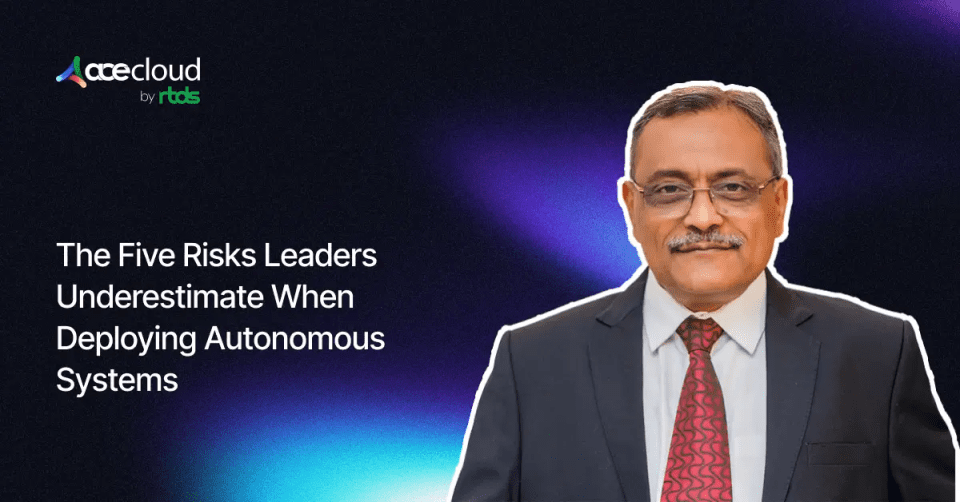
Vinay Chhabra is the Co-Founder & Managing Director of AceCloud (a brand of RTDS), a leading provider of end-to-end cloud computing solutions to global enterprises across industries at scale. As a visionary leader, Mr. Chhabra plays a crucial role in shaping the company’s strategic direction and firmly believes that organizational success hinges on investing in talent and fostering a culture of innovation. His proactive approach involves continuously exploring new opportunities and integrating emerging technologies into AceCloud’s business framework to stay ahead in a dynamic market.


