Your H200 compute just got 10% more affordable than ever before.
Get Startedright-arrow
Carolyn Weitz's profile image

Carolyn Weitz

Carolyn began her cloud career at a fast-growing SaaS company, where she led the migration from on-prem infrastructure to a fully containerized, cloud-native architecture using Kubernetes.
Since then, she has worked with a range of companies from early-stage startups to global enterprises helping them implement best practices in cloud operations, infrastructure automation, and container orchestration. Her technical expertise spans across AWS, Azure, and GCP, with a focus on building scalable IaaS environments and streamlining CI/CD pipelines.
Carolyn is also a frequent contributor to cloud-native open-source communities and enjoys mentoring aspiring engineers in the Kubernetes ecosystem.

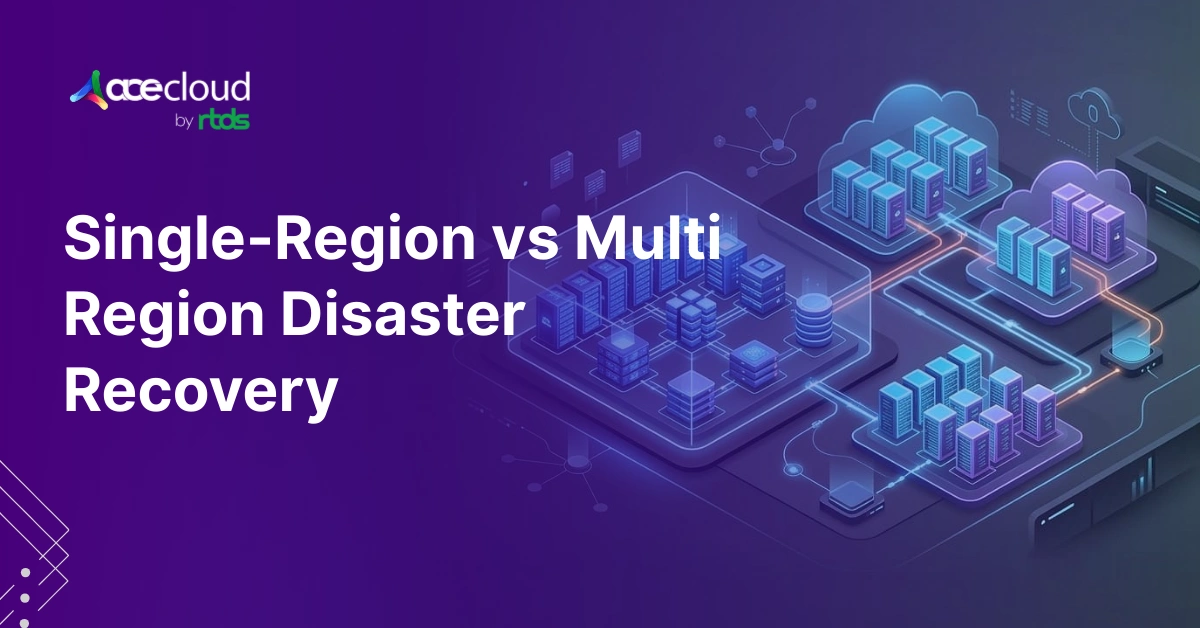
Single-Region vs Multi-Region Disaster Recovery: How to Choose the Right Model

Cloud costs are climbing. Flexera’s 2025 report found that 84% of organizations named cloud spend management as their top challenge. Budgets were already running 17% over. Spend was expected to jump 28% in the coming year. At the same time, teams overestimate how ready they actually are. Research from Unitrends and Kaseya found that more than 60% of organizations believed they […]

7-Steps Workflow to Troubleshoot CrashLoopBackOff Pods in Kubernetes

When you deploy a change, run kubectl get pods and see CrashLoopBackOff in Kubernetes. It appears when a container starts, fails and is restarted repeatedly while the kubelet increases the delay between attempts. That exponential backoff is capped at 5 minutes and resets after 10 minutes of stable runtime, which can make incidents feel intermittent. On call, […]

How to Implement AI-Predictive Routing in Global Load Balancers for Sub-10ms Latency

AI predictive routing strategies for global load balancers matter because you are chasing lower latency across more regions, clouds and edge locations. Meanwhile, internet routes shift, peering changes and origin pools hit saturation during demand spikes. Under those conditions, “route to the closest region” stops being dependable for tail latency. Predictive routing treats global steering […]

Running GPU Workloads on Kubernetes vs a Managed GPU Cloud Platform

Kubernetes vs. Managed GPU Cloud is a key choice for scaling training, batch and real-time inference. In this guide, ‘GPUs on Kubernetes’ refers to clusters where you operate the Kubernetes control plane, GPU nodes, and stack (drivers, plugins, autoscaling). ‘Managed GPU cloud platform’ refers to provider-operated GPU platforms where most of that stack is abstracted away, […]

Enterprise Cloud Visibility Improved With Online Information Systems Management Analytics

Enterprise cloud environments have grown stronger and more complex in the last ten years. Companies now rely on dozens of services, vendors, and deployment models to keep operations running smoothly, improve customer experiences, and reach innovation goals. The challenge is no longer “do we have data?” It is “do we have shared, decision-ready visibility?” In Flexera’s […]

Best Container Registry for Kubernetes in 2026 (Comparison + Migration Checklist)

With more than a dozen container registries on the market, it is easy to find one that stores Docker images. CNCF’s Annual Cloud Native Survey reports that 82% of container users were running Kubernetes in production to pull images across multiple clusters and environments. However, finding a container registry service that fits your security needs, access model, hosting limits […]

8 FWaaS Patterns to Stabilize Multi-Cloud Security Groups

Multi-cloud security groups are crucial for managing access across AWS Security Groups, Azure NSGs and GCP firewall rules. They help teams deliver faster. In a unified multi-cloud setup, speed can create policy drift, duplicate rules and inconsistent enforcement across accounts, regions and subscriptions. This can result in audit gaps, a larger blast radius and slower […]

Containers as a Service (CaaS): Models, Use Cases, and a Practical Selection Guide

Container as a Service (CaaS) helps developers and platform teams package, ship and run applications. It does this across environments without turning infrastructure into a full-time job. CaaS can help you meet reliability, security and cost expectations. By simplifying the deployment and management of containerized workloads, CaaS reduces operational drag. Depending on the model (managed Kubernetes […]

ClusterIP vs NodePort vs LoadBalancer vs Ingress: What to Use in 2026

Kubernetes networking looks easy until you have to ship. Inside the cluster, everything talks over service types. Then your product wants a public URL, security wants least privilege, finance wants predictable spend, and your platform team wants a pattern that lasts. That tension is amplified going into 2026 because Kubernetes is mainstream infrastructure at scale: […]

DPDP and Data Residency Requirements for Cloud GPU Workloads in India

Cloud GPUs let teams spin up thousands of cores for days, experiment fast, and scale down when the job is done. In India, that same flexibility now sits next to a fast-tightening privacy and governance environment. This matters because the data-hungry GPU workloads ingest customer prompts, documents, images, audio, HR records, clickstreams, and transaction histories to generate […]