Over the past few years, technology has been booming in every industry, and one of them is cloud computing technology. This technology is reshaping the business outlook and thinking process of developers about application deployment and infrastructure development.
Well, serverless computing is offering one of the most transformative shifts in how complicated applications can be easily built and managed. It does not mean that they are not using the servers for application building, but they only have to focus on writing and deploying code.
Serverless is already mainstream across major clouds. In Datadog’s 2025 State of Containers and Serverless report, 65% of AWS customers used Lambda, 70% of Google Cloud customers used Cloud Run, and 56% of Azure customers depend on it.
What is Serverless Architecture?
Serverless architecture is the departure from the traditional method to a modern concept, where we can build and run complicated applications and services without thinking about managing the infrastructure servers.
Here, the word ‘serverless’ does not mean that they are working without a server. It simply means the developer does not have to worry about the servers as a third-party public cloud service provider will manage the server space. And they allocate resources as required.
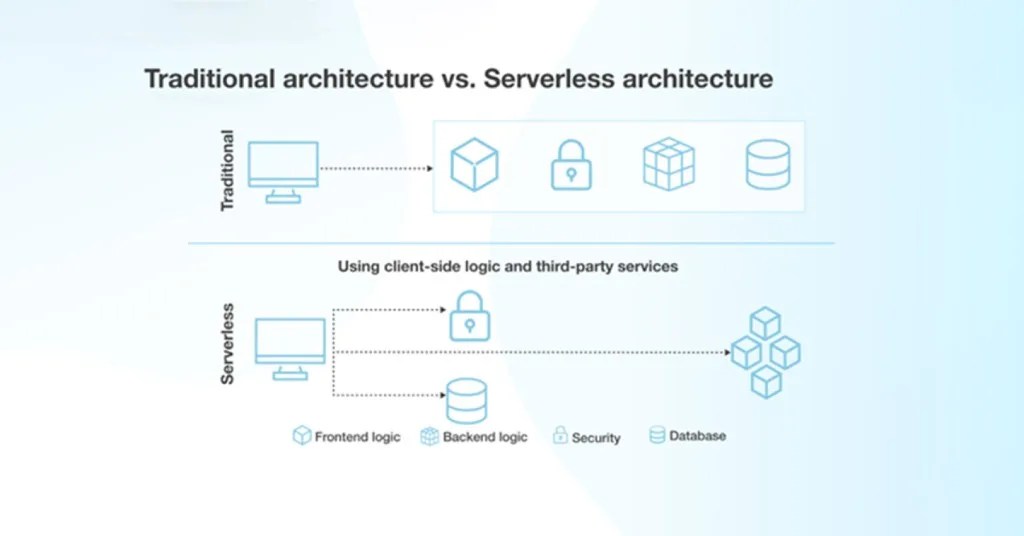
The cloud service providers will take care of installing operating systems, configuring network settings, and handling security patches. Besides, they will also take care of server management, maintenance, and scaling, allowing developers to concentrate purely on writing code.
How Serverless Architecture Works?
Understanding the flow of how serverless architecture works is essential for appreciating its efficiency and scalability.
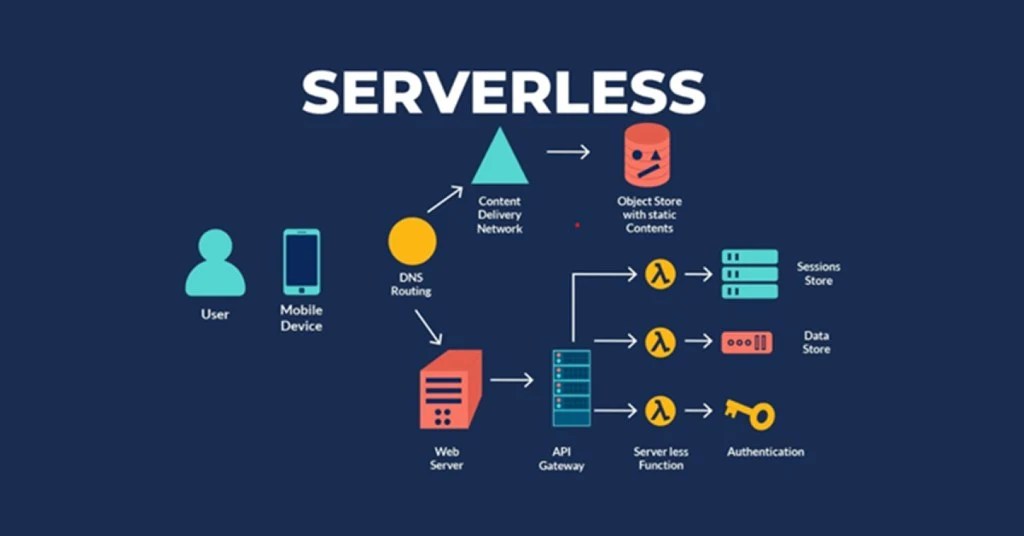
1. Event Trigger
An event such as an HTTP request, file upload, or message in a queue triggers the serverless function. This event can come from various sources like a web application, IoT device, or another service.
2. Function Invocation
Upon detecting the event, the cloud provider invokes the corresponding serverless function. The function is deployed in an isolated environment where it can execute its task.
3. Execution Environment
The function runs in a managed, temporary environment that is provisioned and scaled automatically by the cloud provider. This environment is stateless, ensuring that each function invocation is independent.
4. Resource Management
The cloud provider dynamically allocates the necessary compute and memory resources to execute the function. This ensures optimal resource utilization and cost efficiency.
5. Response Handling
After executing the task, the function processes the event and sends back a response, if necessary. For example, it might return data to a web application or update a database.
6. Automatic Scaling
If multiple events occur simultaneously, the cloud provider scales the environment to handle the increased load. This scaling is automatic and transparent to the user.
7. Billing
Users are billed based on the actual compute time and resources consumed by the function during its execution. This pay-as-you-go model ensures cost efficiency, as users only pay for what they use.
What are the Different Models of Cloud Computing?
Here, we have discussed some of the most used models of cloud computing.
- FaaS(Function as a Service): FaaS, the backbone of serverless computing, allows developers to deploy individual functions triggered by events. Examples include AWS Lambda, Google Cloud Functions, and Azure Functions.
- BaaS (Backend as a Service):BaaS provides ready-to-use backend services like databases and authentication,eliminating infrastructure management. Examples include Firebase and AWS Amplify.
- PaaS (Platform as a Service):PaaS offers a platform for developing, running, and managing applications without infrastructure hassles. Examples include Heroku and Google App Engine.
- IaaS (Infrastructure as a Service):IaaSdelivers virtualized computing resources online, offering greater infrastructure control. Examples include AWS EC2 and Microsoft Azure Virtual Machines
Complete Cloud Computing Model Comparison Table
| Feature | FaaS | BaaS | PaaS | IaaS |
| Primary Focus | Functions/Events | Backend Services | Application Development | Infrastructure Resources |
| Management Level | Function Execution | Backend Management | Platform Management | Infrastructure Management |
| Scalability | Auto-scalable per function | Auto-scalable per service | Scalable per app | User-defined |
| Developer Control | Code only | Minimal (backend setup) | Application and some settings | Full control |
| Typical Use Cases | Microservices, Event-driven | Databases, Authentication | Web apps, APIs | Custom VMs, Networking |
| Examples | AWS Lambda, Google Functions | Firebase, AWS Amplify | Heroku, Google App Engine | AWS EC2, Azure VM |
What are the Benefits of Serverless Architecture?
Serverless architecture offers numerous benefits that make it an attractive option for modern application development:
1. Cost Efficiency
One of the most significant advantages of serverless computing is its cost efficiency. With traditional server-based models, businesses must pay for servers regardless of their usage.
This often leads to underutilized resources and higher costs. In contrast, serverless computing follows a pay-as-you-go model, where users are billed only for the actual compute time and resources consumed by their functions.
This can result in substantial cost savings, particularly for applications with variable workloads.
2. Scalability
Serverless solutions are designed to scale automatically. The cloud provider handles the scaling, ensuring that the right amount of computational resources are allocated to handle the load.
Whether the application needs to handle a single request or thousands of simultaneous requests, the serverless platform scales the resources up or down seamlessly.
This automatic scaling is particularly beneficial for applications with unpredictable traffic patterns.
3. Reduced Operational Complexity
Serverless architecture eliminates the need for infrastructure management, allowing developers to focus on writing and deploying code.
Tasks such as server provisioning, maintenance, and scaling are handled by the cloud provider, reducing the operational burden on development teams.
This simplification can lead to faster development cycles and improved productivity.
4. Faster Time to Market
By abstracting away infrastructure concerns, serverless computing accelerates the development and deployment process.
Developers can quickly deploy functions and services without worrying about server setup or configuration.
This agility allows businesses to bring new features and products to market faster, gaining a competitive edge.
5. Improved Resource Utilization
Serverless architecture optimizes resource utilization by allocating compute resources dynamically based on demand.
This ensures that servers are not running idle, waiting for requests. As a result, businesses can achieve better resource efficiency and reduce waste.
6. Enhanced Developer Experience
Serverless platforms provide developers with tools and frameworks to simplify the development process.
Features such as integrated development environments (IDEs), debugging tools, and monitoring services streamline the workflow, making it easier for developers to build, test, and deploy functions.
Use Cases of Serverless Architecture
Serverless architecture is versatile and can fit various industries and use cases including:
- Microservices: Ideal for microservices, allowing independent function deployment, granular scaling, and easy updates.
- Event-Driven Applications: Excels in event-driven scenarios like file uploads, database changes, and HTTP requests, supporting real-time processing and automation.
- Real-Time Data Processing: Perfect for processing real-time data streams, useful for log analysis, IoT data, and real-time analytics.
- Mobile Backend: Efficient for mobile app backends, managing databases, authentication, and data sync without server management.
- IoT Applications: Scales automatically to handle data from numerous IoT devices, processing sensor data and triggering actions.
- API Gateways: Builds scalable, cost-effective API gateways, simplifying request handling and backend service exposure.
- Chatbots and Voice Assistants: Supports scalable chatbots and voice assistants, managing numerous concurrent requests flexibly.
What are the Tools Supporting Serverless Architecture?
Several tools and platforms facilitate the development and deployment of serverless applications:
- AWS Lambda: AWS Lambda, a leading FaaS from Amazon, runs code in response to events. It supports languages like Node.js, Python, Java, and C#.
- Google Cloud Functions: Google Cloud Functions, Google’s serverless platform, runs event-driven code and integrates with other Google Cloud services, supporting Node.js, Python, and Go.
- Azure Functions: Azure Functions, from Microsoft, deploys and manages serverless functions with support for various languages and integrates with Azure services, offering built-in CI/CD and monitoring.
- Firebase: Firebase, a BaaS from Google, provides real-time databases, authentication, hosting, and more, simplifying mobile and web app development without server management.
- Serverless Framework: Serverless Framework is an open-source tool that simplifies serverless app deployment across providers like AWS, Google Cloud, and Azure, using a unified interface.
- Knative: Knative, built on Kubernetes, simplifies deploying serverless workloads by abstracting Kubernetes complexities.
- Netlify: Netlify offers serverless functions and continuous deployment for web apps, integrating with version control systems for seamless deployment.
- OpenFaaS: OpenFaaS is an open-source framework for building serverless functions with Docker containers, deployable across various cloud providers or on-premises.
We Help You Make Better Cloud Computing Decisions
Serverless computing revolutionizes cloud architecture by eliminating server management, offering automatic scaling, and using a pay-as-you-go model. It simplifies development across various applications, supported by tools like AWS Lambda and Google Cloud Functions.
Embracing serverless architecture enhances scalability, efficiency, and rapid deployment, positioning businesses for future innovation. Want to learn how cloud computing can help your business? Connect with our expert cloud consultants and ask all your questions.
Book your free consultation today!
Frequently Asked Questions
Serverless architecture is a cloud computing approach where developers build and run applications without managing servers directly. The cloud provider handles infrastructure tasks such as provisioning, scaling, maintenance, and patching, while developers focus on writing and deploying code.
No. Serverless does not mean servers are eliminated. Servers are still used behind the scenes, but they are fully managed by a third-party cloud provider, so developers do not have to handle server administration.
Serverless architecture works through event-driven execution. When an event such as an HTTP request, file upload, or database update occurs, the cloud provider automatically triggers the relevant function, allocates resources, runs the code, and scales as needed.
FaaS, or Function as a Service, is a major part of serverless computing. It allows developers to deploy individual functions that run in response to events. Serverless computing is a broader concept that can also include services like BaaS, where backend components such as authentication and databases are managed for you.
The main benefits of serverless architecture include cost efficiency, automatic scaling, reduced operational complexity, faster deployment, improved resource utilization, and a better developer experience. It is especially useful for applications with fluctuating workloads.
Serverless architecture is ideal for microservices, event-driven applications, real-time data processing, mobile backends, IoT solutions, API gateways, chatbots, and voice assistants. It works best for workloads that need flexibility and rapid scaling.
Yes, serverless can be very cost-effective because businesses only pay for the compute resources they use. Unlike traditional server models, there is no need to pay for idle infrastructure, which helps reduce unnecessary costs.
Popular serverless tools and platforms include AWS Lambda, Google Cloud Functions, Azure Functions, Firebase, Serverless Framework, Knative, Netlify, and OpenFaaS. These tools help businesses build, deploy, and manage serverless applications more efficiently.