
On-demand computing is a utility-based model where you generally pay based on provisioned or measured usage instead of fixed, long-term capacity. It allows businesses to access IT tools like cloud servers, database storage, cloud backup and serverless services when needed.
When demand suddenly increases, procurement cycles and capacity planning can slow things down. This may lead to overprovisioning or unpredictable costs.
Instead of spending a lot on fixed infrastructure, teams can set up virtual resources in minutes. They can scale these resources up or down easily, aligning costs with actual usage. These shifts spending from CapEx to OpEx.
On-demand computing underpins today’s cloud infrastructure boom. Synergy Research Group reports cloud infrastructure services revenue reached $119.1B in Q4 2025, with full-year 2025 at $419B and 30% YoY growth in Q4, fueled in part by GenAI demand.
In this blog, we’ll cover the core concepts, key technologies and practical use cases of on-demand computing, along with the benefits you should keep in mind.
What is On-Demand Computing?
On-Demand Computing (ODC) is a delivery model where computing resources are provided for you when you need them. These resources can be hosted inside your organization as a private cloud (self-service, virtualized infrastructure) or supplied by a cloud service provider.
The on-demand approach emerged to help organizations handle changing demand more efficiently. Demand is often uneven, which makes it expensive to keep enough capacity for peak usage at all times.
However, reducing infrastructure to cut costs can leave you short when demand spikes. With on-demand computing, you can scale resources up or down quickly, often through a self-service console or API and only keep the capacity you actually need.
On-Demand Computing vs Traditional Computing
Here’s a quick side-by-side view of how on-demand computing differs from traditional, fixed infrastructure models.
| Aspect | On-demand computing | Traditional computing |
|---|---|---|
| Buy vs use | Rent capacity (pay-per-use) | Buy capacity (upfront) |
| Scale | Elastic, near-instant | Slow, hardware-limited |
| Provisioning | Self-service via API/IaC | Tickets + manual setup |
| Cost | OpEx, usage-based | CapEx, fixed spend |
| Peak handling | Scale up only when needed | Overbuy for peak |
| Ops burden | More provider-managed | Fully in-house |
| Best for | Spiky/fast-changing workloads | Stable/predictable workloads |
What are the Key Benefits of On-Demand Computing?
Here is the list of on-demand computing benefits that you should consider:
Scalability
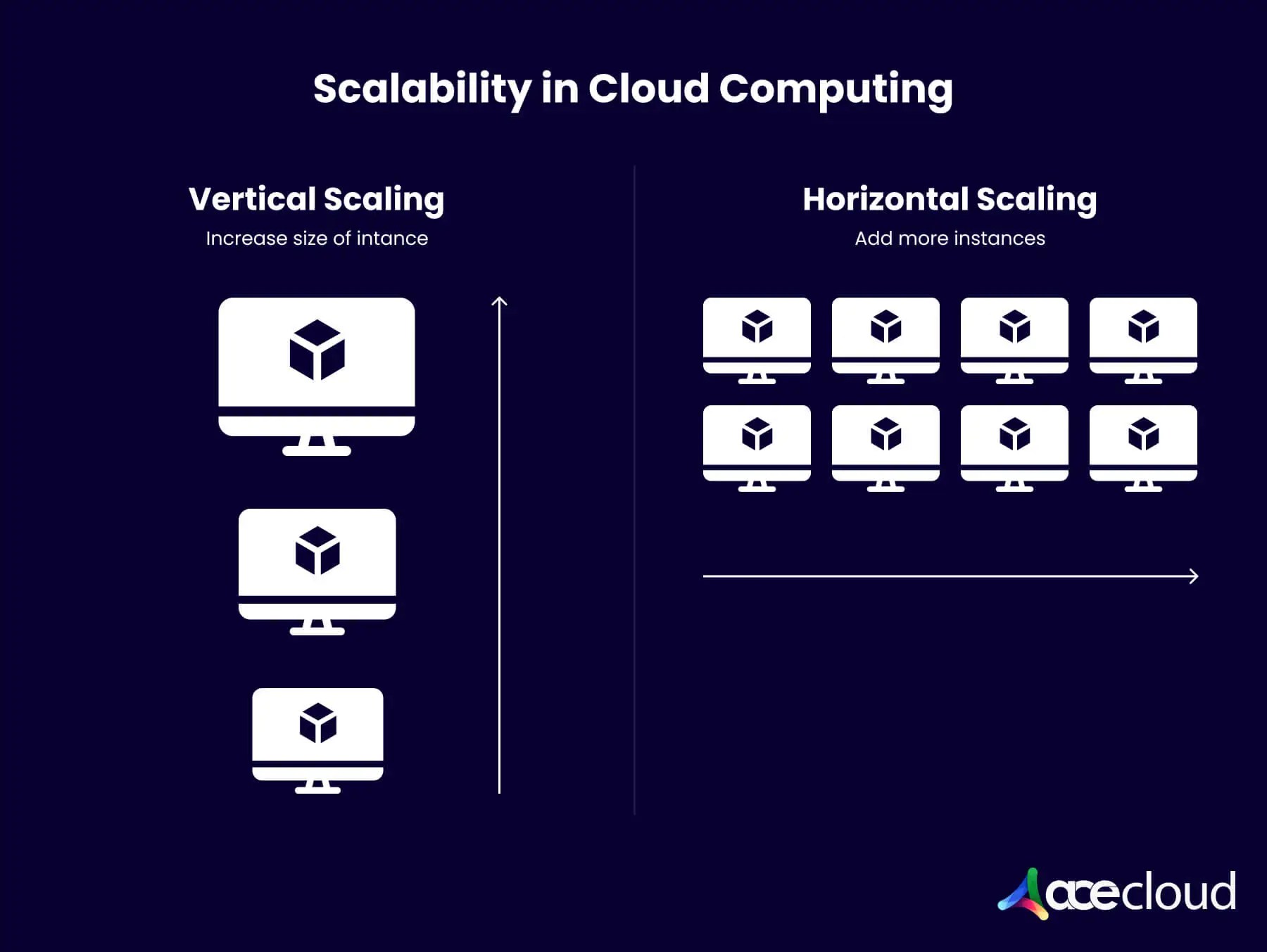
Cloud platforms let you increase or reduce CPU, memory and storage quickly as demand shifts. You avoid buying servers for peak loads, because capacity can be provisioned through consoles or APIs, then released when usage drops. It helps to keep environments right-sized for teams running unpredictable workloads today.
Cost Savings
Cloud services shift spending from large upfront purchases to metered operating costs tied to actual use. You can reduce expenses for hardware refreshes, data center space and routine maintenance, and in some cases software licensing, while paying for the capacity and services you provision and use during the billing period.
Accessibility
Cloud computing provides secure access to applications and data over the internet, which supports remote and distributed work. With identity controls and encrypted connections, you can collaborate from offices, client sites or home, using laptops, tablets or mobile devices without requiring a private network extension.
Reliability
Most cloud providers design high availability using redundant power, networking and clustered systems across multiple facilities. If a server fails, workloads can restart on healthy hosts, and replicated storage helps keep data accessible, improving continuity for critical applications even during maintenance windows or outages.
Flexibility
Cloud computing supports public, private and hybrid deployments, letting you choose where workloads run based on risk and performance needs. You can mix services, regions and instance types, then adjust architecture as requirements change, without redesigning everything to support compliance, latency targets and migration plans.
What are the Key Technologies to Enable On-Demand Computing?
The below core technologies make cloud on-demand possible by turning infrastructure into programmable, scalable virtual resources.
1. Virtualization
Virtualization enables multiple virtual machines (VMs) to run on a single physical server by abstracting underlying hardware into virtual resources (CPU, memory, storage, networking).
This abstraction is foundational to on-demand computing because it supports resource pooling, rapid provisioning, scalability and elasticity.
A hypervisor is the software layer that creates and manages VMs on physical hardware. Common hypervisors include VMware ESXi, Microsoft Hyper-V and KVM.
2. Containers
Containers provide OS-level isolation that packages an application and its dependencies into a portable unit that runs consistently across environments.
Unlike VMs, containers typically share the host operating system kernel (especially on Linux), which often makes them lighter-weight and more resource-efficient for many workloads.
Technologies like Docker popularized container packaging, while orchestration platforms like Kubernetes help run containers reliably at scale.
3. Microservices Architecture
Microservices architecture breaks an application into a set of loosely coupled services, each responsible for a specific business capability.
This makes it easier to scale and deploy components independently, which aligns well with on-demand environments where demand can shift rapidly across features or services.
Microservices are commonly deployed in containers to improve portability, consistency and scaling.
4. Automation and Orchestration Tools
Automation and orchestration reduce manual effort and risk in dynamic on-demand environments.
Tools like Terraform (Infrastructure-as-Code) and Ansible (configuration automation) help teams provision and configure infrastructure consistently. Kubernetes orchestrates containerized workloads, handling scheduling, scaling, rollouts and self-healing.
Together, these tools improve reliability, standardization and speed while minimizing human error.
5. APIs (Application Programming Interfaces)
APIs are essential to on-demand computing because they enable programmatic control of infrastructure and services.
Cloud providers expose APIs (often REST-based, along with SDKs and CLIs) so teams can provision resources, integrate services, and automate workflows through code.
This API-driven approach is what makes self-service provisioning, repeatability and large-scale automation practical.
How Teams Use On-Demand Computing to Move Faster?
Here are the most common cloud-driven scenarios where on-demand computing replaces manual provisioning and idle capacity.
File Storage
File storage is one of the most common cloud use cases. Many organizations use services like Google Drive, Dropbox, OneDrive and iCloud to store files securely and access them from any device.
Big Data Analytics
Cloud platforms let organizations collect, process and analyze large data volumes to generate actionable insights. Services from AWS, Google Cloud Platform, Microsoft Azure and IBM Cloud support data-driven decisions by providing scalable analytics tooling.
Data Backups and Archiving
Organizations need reliable ways to protect critical data. Services such as AWS Backup, Azure Backup, Google Cloud Storage and Backblaze offer automated backup and archiving to support disaster protection and compliance requirements.
Software Testing and Development
Cloud platforms provide on-demand environments for building and testing software. Tools like AWS CodeStar, Azure DevOps, Google App Engine and Heroku help development teams work faster without investing in physical infrastructure.
Communication
Cloud-based communication tools improve collaboration through secure messaging and video conferencing. Common examples include Google Workspace, Microsoft Teams, Zoom, Slack and Twilio.
Social Media Networking
Social media platforms such as Facebook, LinkedIn, Instagram and Twitter depend on cloud infrastructure to host user data at scale. Cloud hosting supports fast, low-latency access to photos, posts and videos, which helps sustain global engagement.
Business Process Outsourcing
Organizations use cloud-based SaaS to outsource standardized processes such as payroll and customer support. These services run efficiently with lower operational overhead and can scale smoothly as demand changes.
Content Delivery
Content delivery networks (CDNs) distribute digital content globally to reduce latency and improve performance. Providers such as Cloudflare and Akamai help deliver websites, user-generated content and streaming media reliably across regions.
Disaster Recovery
Disaster recovery as a service (DRaaS) helps restore critical applications and data after disruptions such as cyberattacks or natural disasters. Solutions like VMware DRaaS and IBM recovery services support faster recovery and continuity for essential operations.
Put On-Demand Computing into Action with AceCloud
On-demand computing only delivers results when you can provision fast, scale confidently, and keep costs predictable. If your teams are still stuck overbuying for peak, waiting on infrastructure tickets, or worrying about surprise bills, it’s time to operationalize a true pay-as-you-go model.
AceCloud is a GPU-first cloud and IaaS provider built for modern workloads, offering on-demand and spot NVIDIA GPUs, scalable compute, storage, networking, and managed Kubernetes with an uptime-focused SLA and migration assistance.
Start small: pick one workload, move it to on-demand capacity, apply basic guardrails, and measure cost and performance.
Explore AceCloud to launch your first on-demand environment today.
Frequently Asked Questions
On-demand computing is a cloud consumption model where you can provision computing resources immediately and pay based on measured usage.
It uses metering to charge for compute runtime, storage consumption, data transfer, and managed service usage, which shifts spending from CapEx to OpEx.
It is a common cloud consumption pattern, but not all cloud usage is fully on-demand because reserved capacity and long-term contracts can also apply.
Examples include autoscaling web apps, ephemeral dev and test environments, batch analytics clusters, AI training bursts, and disaster recovery drills.
It improves provisioning speed, supports elastic capacity, aligns costs with real demand, and enables faster experimentation with controlled operational risk.

Related Post








Get in Touch

Credits First!
- 24*7 Human Support
- Pay-as-you-go Pricing
- No Egress Cost
- Multi Tier Security

 24th March
 4–5 PM IST